
Loading...
Serving Rapid City, SD and surrounding areas. (605) 646-9056
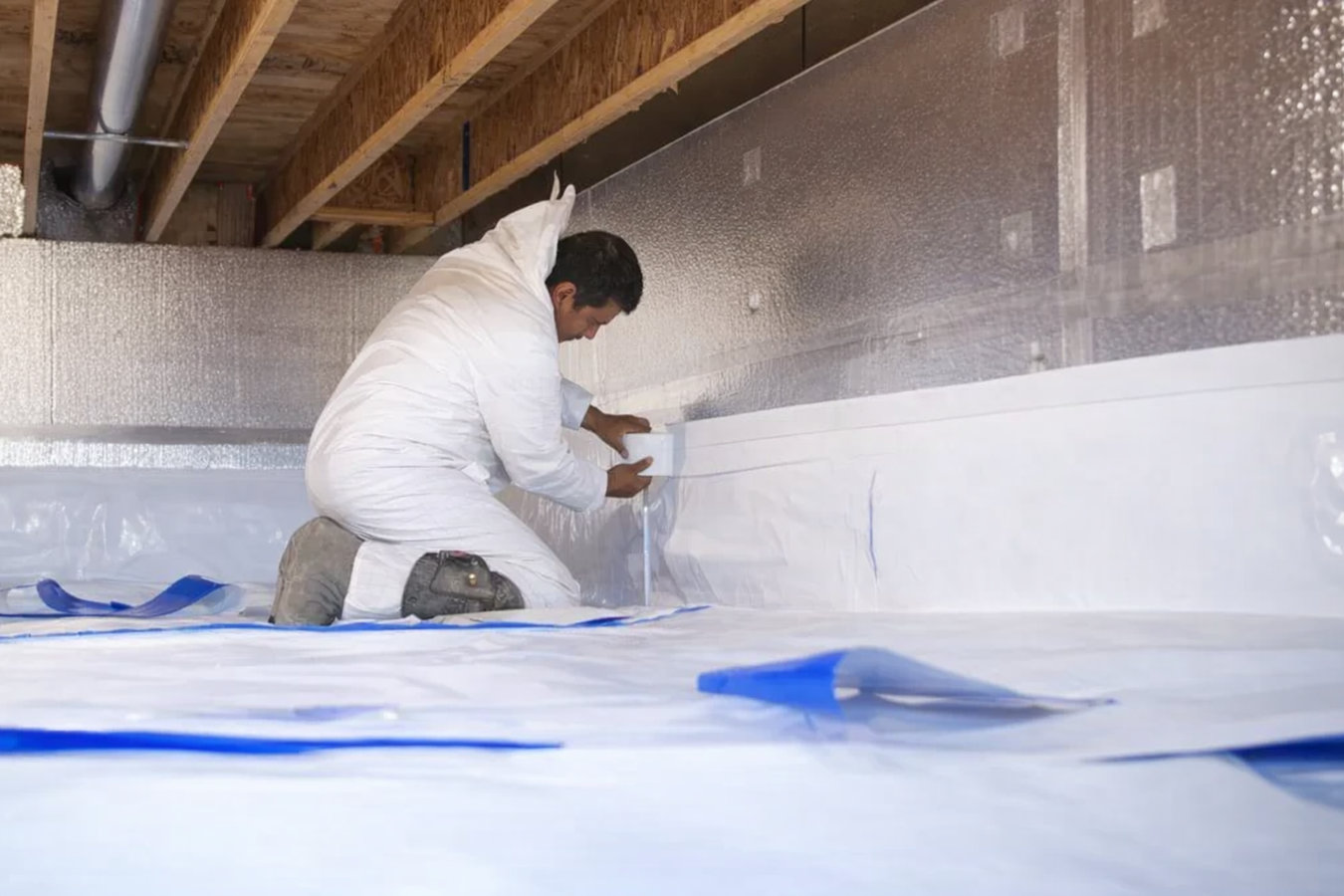
Moisture rising from the ground can quietly damage your floors, insulation, and framing for years before you notice it. A correctly installed vapor barrier stops it at the source, giving your home the protection it needs through Rapid City winters, spring snowmelt, and every season in between.
Vapor barrier installation in Rapid City means placing a heavy-duty plastic or reinforced membrane in your crawl space, basement, or wall assembly to block moisture from moving through floors, soil, or concrete - most standard crawl space installations take one full day and the benefit starts immediately. The material creates a continuous seal between the moisture source and your home's structure, stopping the slow damage that comes from wood framing, subfloor panels, and insulation absorbing ground moisture over years. The difference between a good installation and a poor one comes down to seam quality and wall edge coverage - not just the material itself.
If your Rapid City home is more than 40 years old and has never had this work done, there is a good chance the crawl space or basement has no effective moisture protection - or whatever was there originally has long since degraded. This is the most common situation in established neighborhoods built in the 1950s through 1970s, where bare dirt crawl spaces were the norm. Vapor barrier installation is often done alongside crawl space vapor barrier work when the goal is to address every moisture entry point in the home in a single project.
A well-installed vapor barrier also protects whatever insulation is in the space. Wet insulation does not insulate - it loses most of its thermal value. Protecting the crawl space first, then insulating, is the correct sequence for any home where moisture has been an issue.
An earthy, damp odor - especially noticeable in the morning, after rain, or during spring snowmelt - is almost always ground moisture rising through an unprotected crawl space or basement. In Rapid City, this smell often becomes noticeable in late spring when saturated soil pushes moisture upward. The odor means moisture has been moving freely into your living space and has been doing so for some time.
Wood subfloor panels and floor joists absorb moisture over time, and when they do, they begin to sag and soften. If a section of your floor feels different than it used to - bouncy, slightly low, or creaky in a way it was not before - that is a sign the structure below has been exposed to moisture. This is more common in older Rapid City homes where the crawl space was never protected.
Condensation dripping from metal pipes or HVAC ducts in the crawl space means the air below your home is humid enough to condense on cold surfaces - a clear sign of ongoing moisture intrusion. White chalky streaks on concrete basement walls are caused by water pushing through the concrete and leaving minerals behind. Both are signals that moisture is present and actively working on your home.
When ground moisture saturates crawl space insulation, that insulation stops holding heat effectively. Your furnace runs longer to maintain the same temperature, and the bills reflect it. If your heating costs have crept up over the years without a clear cause - and your home is more than a few decades old - a missing or degraded vapor barrier is worth investigating.
Rapid City Insulation Company installs vapor barriers in crawl spaces, basements, and wall assemblies depending on where moisture is entering the home. Every job starts with a physical assessment - accessing the space, measuring, checking for existing damage, and identifying what needs to be addressed before the barrier goes in. We use heavy-duty sheeting measured in mils thick enough to hold up to foot traffic and temperature swings - not the thin material that tears within a few years. Seams are overlapped by at least a foot and taped flat, and edges are run up the foundation walls and secured so nothing shifts over time.
For homeowners considering a more complete solution, we can discuss full crawl space encapsulation - sealing walls, closing foundation vents, and adding a dehumidifier to create a fully conditioned space. Vapor barrier installation pairs naturally with retrofit insulation work when the goal is to address both moisture and thermal performance at the same time, and with crawl space vapor barrier installation for a comprehensive moisture control approach across the full underside of the home.
The most common installation - heavy-duty sealed sheeting across the full crawl space floor and up the foundation walls for homes with a vented or unprotected crawl space.
Moisture protection for below-grade basement walls where water pressure pushes moisture through concrete - common in older Rapid City homes with unfinished or partially finished basements.
Installed before concrete is poured or during a slab replacement - blocks ground moisture from moving upward through the slab and into flooring above.
A complete sealed-crawl-space system for homes with persistent moisture problems - going beyond the floor barrier to seal walls, vents, and sometimes add active dehumidification.
Rapid City experiences summer highs above 100 degrees and winter lows well below zero, and those extremes cause the ground under your home to expand, contract, and move with each season. That movement puts stress on any barrier material that is not thick enough and properly secured at the edges - which is one reason why material quality matters more here than in milder climates. The city's semi-arid climate can also be misleading: the air inside your home often feels dry even when the crawl space below is damp, because ground moisture behaves differently from ambient humidity. Musty smells and soft floors often appear only after moisture has already done significant damage. Homeowners in Hot Springs and Custer face similar conditions and benefit from the same vapor control approach.
Portions of Pennington County sit on soils with a higher clay content that swell when wet and shrink when dry, which can crack foundation walls and create new pathways for moisture to enter a crawl space or basement. Homes in these areas benefit from a heavier-duty barrier that can flex with minor ground movement without tearing or losing its seal at the seams. The Black Hills snowmelt season - typically March and April - is the most intense moisture exposure window of the year, and scheduling an inspection or installation before spring puts homeowners in the best position. The U.S. Department of Energy's crawl space guidance identifies vapor barriers as a foundational step in any cold-climate moisture control plan, and Rapid City's Climate Zone 6 rating puts it firmly in that category.
When you call or submit a request, we ask a few basic questions about your home - age, whether you have noticed any moisture signs, and how the crawl space or basement is accessed. We reply within one business day and schedule a time to come out at your convenience.
A crew member accesses your crawl space with a flashlight and moisture meter, measuring the space, checking for existing moisture damage or drainage issues, and confirming what type of barrier is right for your situation. You get a written estimate after the visit - not a phone guess. The assessment is free and takes 30 to 60 minutes.
The crew clears any loose debris, lays the sheeting across the full floor with seams overlapping by at least a foot and taped flat, then runs the barrier up the walls and secures the edges. Most single-family crawl spaces are completed in one day. You stay home and go about your day - disruption inside the house is minimal.
Before leaving, the crew photographs the finished installation inside the crawl space and walks you through what was done. You see the sealed seams, wall coverage, and completed barrier without having to go in yourself. Written documentation stays on file if you ever need it for a home sale or warranty.
Free on-site estimate. Written quote after we physically inspect your space. No pressure, no phone guesses.
(605) 646-9056We use reinforced sheeting with a thickness designed for crawl spaces that experience extreme temperature swings and seasonal freeze-thaw cycles - not the hardware-store plastic that cracks within a few years. In Rapid City, the barrier is working hard every winter and spring, and the material needs to match that demand.
Rapid City Insulation Company works in all 12 service areas across the Black Hills and surrounding region - from Rapid City itself to Hot Springs, Custer, Spearfish, and beyond. We know the soil conditions, housing stock ages, and seasonal moisture patterns that shape how this work needs to be done here.
We photograph the finished installation before leaving every job - the seams, the wall edges, the full floor coverage. That documentation gives you proof of a complete installation without having to crawl in yourself, and it stays on file for future reference. A contractor who will not show you the finished work is a contractor worth being cautious about.
Building Performance Institute training emphasizes how moisture moves through a home as a system, not just through individual components. When we install a vapor barrier, we consider the whole picture - how your crawl space connects to your basement, your walls, and your living space - rather than treating each space in isolation. The result is protection that works together, not just in one spot.
A vapor barrier done right is a 20-year investment in your home's structural integrity. Our process - physical inspection first, heavy-duty materials, taped seams, wall coverage, and photo documentation - reflects how seriously we take that responsibility for every Rapid City homeowner we work with.
Adding or upgrading insulation in an existing home once the moisture problem has been resolved - the right sequence for lasting thermal performance.
Learn moreFocused vapor barrier work specifically for crawl spaces, including debris clearing, assessment, and foundation wall coverage as a complete installation.
Learn moreSpring snowmelt is the hardest test for unprotected crawl spaces and basements in the Black Hills. Get your free on-site estimate scheduled now and be protected before the ground thaws.