Loading...
Serving Rapid City, SD and surrounding areas. (605) 646-9056
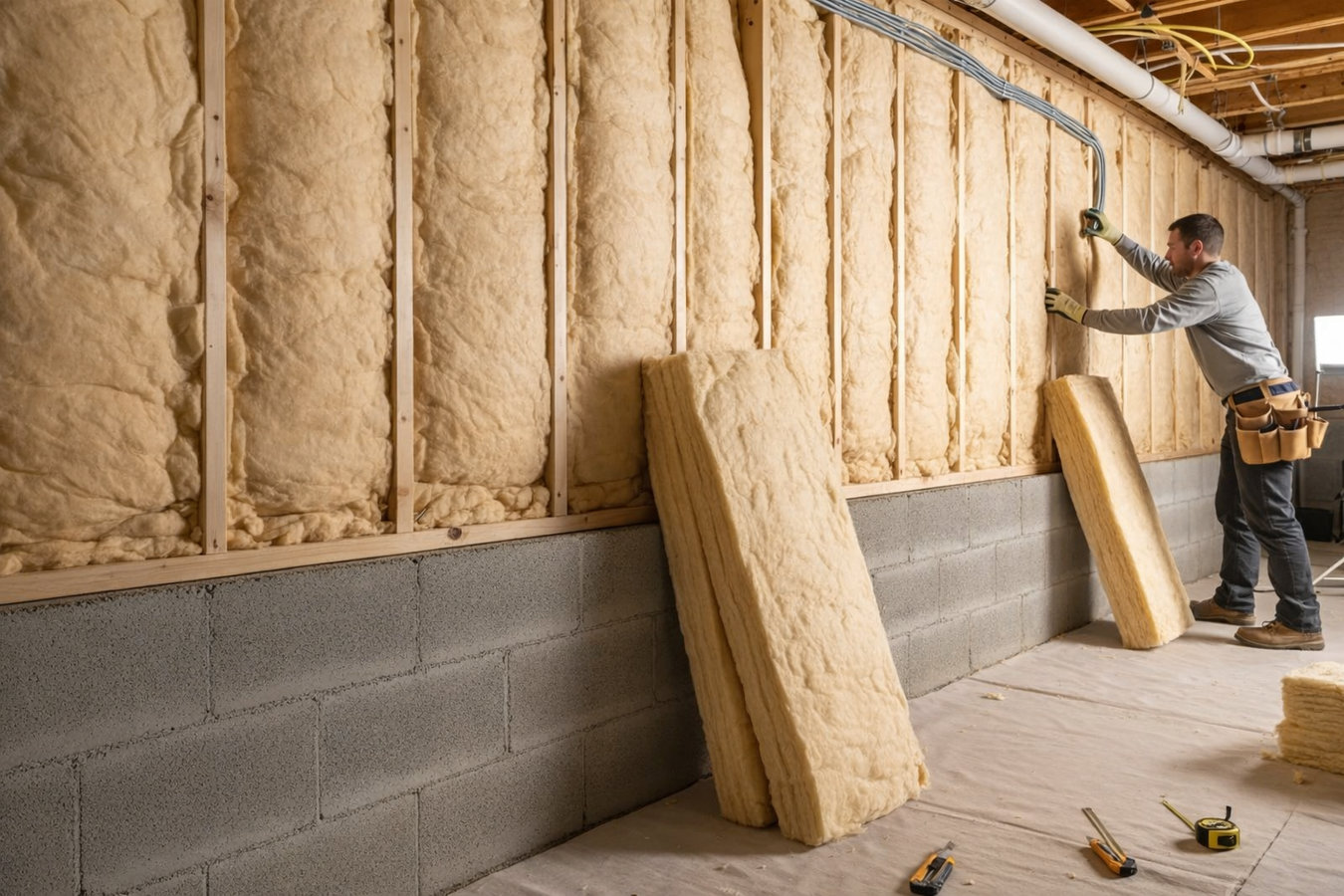
Your bare concrete foundation walls are leaking heat every night. We stop that with proper basement insulation so your home stays warm and your furnace stops running overtime.
Basement insulation in Rapid City creates a barrier between your living space and the cold ground below - most projects are completed in one to two days and produce noticeable results by the first cold snap.
If your floors feel cold in the mornings or your heating bill climbs sharply from November through February, your basement is almost certainly part of the problem. Uninsulated foundation walls and an uninsulated ceiling above an unfinished basement let heat drain out of your living space all day and all night. Basement insulation in Rapid City puts a stop to that - and in homes built before the 1980s, which describe a large share of our older neighborhoods near downtown and West Boulevard, the gains can be significant.
Basement insulation works best when it is part of a whole-home approach. If your rim joists and crawl space are unaddressed, consider pairing this work with crawl space insulation for the most complete coverage in the areas beneath your living floors.
If the rooms directly above your unfinished basement feel cold even with the heat running, the basement is pulling warmth out of your living space. This is one of the clearest signs the ceiling or walls below are uninsulated. Waiting means your furnace runs longer and your heating bill stays high.
If you walk into your basement and the foundation walls are exposed concrete or block with nothing attached to them, you have little to no insulation. This is common in Rapid City homes built before the 1980s, and it is one of the easiest problems to confirm without any special tools.
White, powdery deposits on concrete - called efflorescence - are a sign that water has moved through the wall and left mineral deposits behind. Before insulation goes in, a contractor needs to assess the moisture situation. This is especially important given Rapid City's spring rains and freeze-thaw cycles.
If your gas or electric bill climbs sharply from November through February, your basement is likely one of the biggest culprits. In Rapid City's climate, an uninsulated basement accounts for a meaningful share of total heat loss - and your furnace is working overtime to compensate.
We handle both wall-side and ceiling-side basement insulation depending on how your basement is used and what your home needs. For finished or semi-finished basements where you want to keep the space warm, insulating the foundation walls directly is usually the better approach. We check for moisture before anything else and, if needed, pair wall insulation with closed-cell foam insulation at the rim joists - the framing where your floor meets the top of the foundation - which is one of the most air-leaky spots in a Rapid City home.
For unfinished storage basements, insulating the ceiling above is a simpler option that still stops the cold from reaching the rooms above. We use fiberglass batts, rigid foam board, and spray foam depending on the application. Every project starts with a written estimate and a moisture assessment. If your basement moisture issues are more involved, a standalone crawl space insulation check may also be part of the conversation.
Best for finished or regularly used basements where you want the entire space to stay warm.
Best for homes with drafty floors or high heat loss at the top of the foundation - often the single highest-impact basement improvement.
Best for unfinished storage basements where insulating the ceiling stops cold air from reaching the rooms above.
Best for basements with complex layouts or moisture-sensitive areas where rigid materials would not seal gaps completely.
Rapid City winters are genuinely demanding - temperatures drop well below zero, wind chills off the Black Hills push those numbers lower, and the cold sets in for months at a time. That means the insulation in your basement has to perform at a higher level than what would be adequate in a milder state. Many homes in established Rapid City neighborhoods - including areas near downtown and along West Boulevard - were built in the mid-20th century when basement insulation was minimal or nonexistent. If your home is more than 40 years old and has never had an insulation assessment, there is a good chance the basement is one of the biggest sources of heat loss you have. South Dakota's energy code sets a minimum standard, but a good contractor will recommend going beyond it for Rapid City's winters.
Freeze-thaw cycles also create real risks for Rapid City basements. Water works into small cracks in foundation walls, expands when it freezes, and widens those cracks over time. That is why we always check for moisture and wall condition before any insulation goes in - insulating over a compromised wall just hides the problem. We serve homeowners throughout the region, including Box Elder and Sturgis, where older ranch homes face the same cold-season heat loss challenges as Rapid City's core neighborhoods. The U.S. Department of Energy's basement insulation guidance recommends that Climate Zone 6 homes - where Rapid City falls - meet higher R-value targets precisely because of conditions like ours.
We will ask a few basic questions about your home - its age, basement layout, and what you have noticed - so we come prepared. You will hear back within one business day to set up a visit. The estimate is free and comes with no pressure.
We walk your basement, look at the walls and ceiling, and check for any signs of moisture or existing insulation. We will show you what we find and explain what we recommend - and why - before any quote is written.
You receive a written estimate covering materials, labor, and any prep work needed. If your project requires a building permit through Rapid City's Building Services office, we handle pulling it - you should not have to manage that yourself.
Most jobs are done in one to two days. When the crew finishes, we walk through the completed work with you so you can see exactly what was done. We leave the space clean and answer any questions before we go.
Free written estimate. No obligation. We check for moisture before recommending anything.
(605) 646-9056Rapid City basements face real moisture pressure from spring rains, snowmelt, and freeze-thaw cycling in the foundation. We check for all of it before any insulation goes in - because insulating over a wet wall just hides the problem. A contractor who skips that step is setting you up for a more expensive repair later.
We have worked in basements across Rapid City - from older ranch homes near downtown and Canyon Lake to newer builds on the north and east sides. That range of experience means we know what to expect when we open the door to your basement, and we can spot problems that are specific to local construction patterns.
You get a written estimate before anyone touches your home. The number includes everything - materials, labor, and any prep work. What you agree to is what you pay. The Insulation Contractors Association of America identifies transparent, itemized quotes as a baseline standard for reputable insulation work - and we hold to that.
We walk through the completed basement with you at the end of every job so you can see exactly what was done. If we found anything unexpected during the work - a hidden crack, evidence of moisture, a gap we had not anticipated - we document it and explain it before closing up. You leave the conversation with answers, not questions.
Every basement insulation project we take on starts with an honest assessment of what your specific home needs - not a standard package sold to every customer. That approach is why homeowners throughout Rapid City call us first.
The highest-performance insulation for rim joists and moisture-sensitive basement areas - seals air and resists water in a single application.
Learn moreAddresses the floor-level heat loss and moisture entry that basement wall insulation alone does not fully cover in homes with a crawl space.
Learn moreRapid City winters are long and cold - the sooner your basement is insulated, the more you save before the next heating season starts.