
Loading...
Serving Rapid City, SD and surrounding areas. (605) 646-9056
Rapid City Insulation Company serves Scottsbluff, NE with basement insulation, attic upgrades, and crawl space services for the older wood-frame homes that make up the core of this city's housing stock. We reply to every Scottsbluff inquiry within 1 business day.
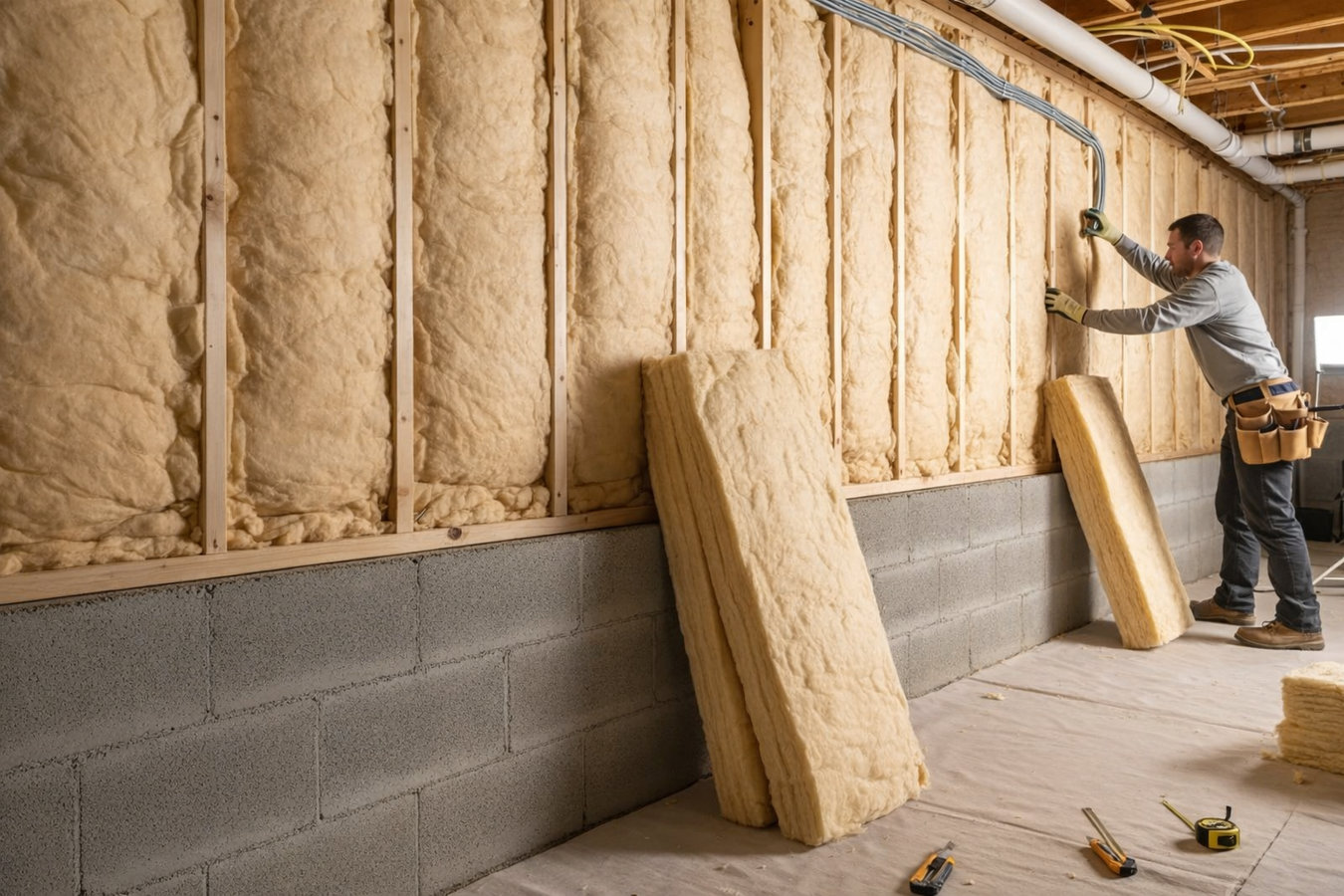
A large share of Scottsbluff's housing stock was built in the 1930s through 1950s, and those homes commonly have unfinished basements with bare concrete or block walls and no insulation on the rim joist - the band of wood framing where the floor sits on the foundation. At 3,900 feet elevation with panhandle winters that drive January lows into the single digits, that uninsulated foundation perimeter is one of the biggest sources of heat loss in the house. Read more about how basement insulation and rim joist sealing address this specific problem in older Nebraska homes.
Scottsbluff averages around 40 inches of snow per year and sits in a wind corridor where open panhandle terrain gives cold air an unobstructed path to the house. Homes built before 1970 - which account for a large portion of Scottsbluff's housing - often have original loose-fill or batt insulation that has compressed over decades to well below Nebraska's current Climate Zone 5 minimums. Bringing attic insulation to R-38 minimum, with air sealing first, stops the primary heat loss path in these homes.
Scottsbluff's sandy, silty soils - deposited by the North Platte River over thousands of years - drain quickly but shift under foundation walls and slabs, opening gaps over time. Homes with crawl spaces rather than full basements often have no insulation at all on the crawl space ceiling or walls, leaving floors above unprotected from the deep freeze that sets in from November through March. Insulating the crawl space and sealing the rim joist stops the cold-floor effect and protects wood floor framing from moisture migration off the sandy soil.
Scottsbluff's panhandle location means wind is a constant, and it finds every unsealed gap in a wood-frame home from the 1940s or 1950s. Attic air sealing - at top plates, wire penetrations, plumbing chases, and recessed fixtures - stops the stack effect that pulls warm interior air up and out while drawing in cold outside air below. Without air sealing, adding insulation depth alone leaves the same air leakage paths open and homeowners wonder why their bills did not drop.
The rim joist and band joist areas in older Scottsbluff homes - where the floor framing sits on top of the foundation wall - are almost universally uninsulated and unsealed in pre-1960 construction. Spray foam applied to these areas creates an air barrier and thermal break in one step, and it conforms to the irregular framing and masonry surfaces found in homes this age. It is also the right material for hard-to-reach areas where cut-and-cobble rigid foam will not seal tightly against old concrete block or poured walls.
The sandy soils around Scottsbluff are permeable, which means moisture wicks upward from the ground into crawl spaces and unfinished basement floors whenever soil moisture is present - even in the high-desert panhandle climate. A properly installed ground-cover vapor barrier over the crawl space or basement floor, lapped up the foundation walls and sealed at seams and penetrations, stops that moisture migration and protects the wood floor framing and subfloor from the slow degradation that comes with years of elevated humidity in an unprotected space.
Scottsbluff sits at about 3,900 feet elevation in the Nebraska Panhandle, a high-elevation, semi-arid stretch of the Great Plains where the terrain is open and flat enough for wind to build speed before it reaches a house. Average annual snowfall is around 40 inches, and January lows regularly drop into single digits Fahrenheit. The frost line in western Nebraska can reach 24 to 36 inches in a hard winter, driving repeated freeze-thaw cycles through late winter and early spring that crack driveways, push on foundation walls, and shift concrete slabs on older properties. Summers swing to the opposite extreme - July highs regularly reach the low 90s with intense UV exposure at elevation that degrades exterior coatings, caulk, and roofing faster than homeowners expect. The hail corridor that runs through this part of the Great Plains means severe summer storms cause recurring roof and siding damage.
The housing stock in Scottsbluff compounds these climate demands. A large share of homes were built in the 1920s through 1950s, when the city grew rapidly as an agricultural and commercial hub for the region. Wood-frame construction with original plaster walls, single-pane windows, and uninsulated basements was standard practice in that era. Many of these homes still have their original structural bones, and the insulation inside the walls and attic - if any was installed at all - has long since degraded or been disturbed by decades of plumbing and electrical updates. An insulation contractor working in Scottsbluff needs to understand what these older homes look like from the inside and how the panhandle climate puts specific demands on the building envelope through every season.
Our crew works on older wood-frame homes throughout Scottsbluff, from the downtown neighborhoods that grew in the 1920s and 1930s to the postwar streets on the east and south sides of the city. We confirm permit requirements with the City of Scottsbluff for any project that needs review, and we know the access challenges that come with pre-1960 construction - irregular framing, shallow attic clearances over original plaster ceilings, and basements with block or poured concrete walls that need different prep than modern poured foundations.
Scottsbluff is the largest city in the Nebraska Panhandle and has served as a regional hub since the days when it was a landmark on the Oregon Trail and the massive sandstone bluffs here were noted by every traveler passing through. Today the city still draws residents from a wide surrounding area, and the homeowners we work with tend to have a practical, long-term relationship with their properties - they want insulation work done right, not just done fast, because they plan to be in the same house next winter.
We also serve homeowners in Hot Springs, SD and across our full service area - if you are near Scottsbluff but outside the city limits, we can still help.
Reach out by phone or through our contact form and we will get back to you within 1 business day. Scheduling a site visit takes a few minutes and we work around your availability.
We inspect your attic, basement, and crawl space, measure existing insulation, and check the rim joist and other common air leak spots. Your written estimate shows materials, labor, and cost separated - no bundled packages, no surprise add-ons.
We seal air leaks first, then install insulation to the specified depth and R-value. Most Scottsbluff projects are completed in a single day - you do not need to leave the house, and cleanup is included before we leave the property.
We walk you through the completed work before we leave and provide a written receipt that separates materials from labor. If you are applying for a utility rebate or energy audit credit, the documentation you need is included.
Scottsbluff homeowners get a free on-site estimate with no obligation. We respond within 1 business day and schedule jobs within days of your approval.
(605) 646-9056Scottsbluff is a city of roughly 14,000 to 15,000 people in the Nebraska Panhandle, situated along the North Platte River valley at the foot of the massive sandstone and clay buttes that make up Scotts Bluff National Monument. That landmark - rising 800 feet above the valley floor - was a famous waypoint on the Oregon Trail and remains the most recognized feature of the surrounding landscape. The city is the largest in the Nebraska Panhandle and serves as a regional hub for shopping, medical care, and services for a wide surrounding rural area. Agriculture, particularly sugar beets and dry beans grown in the irrigated North Platte valley, anchors the local economy alongside Regional West Medical Center and the retail corridor along Broadway.
The housing stock in Scottsbluff reflects the city's rapid growth in the early 20th century - most of the downtown neighborhoods were developed between the 1920s and 1950s, and single-family wood-frame homes on modest lots with mature trees are the dominant building type throughout. Roughly half of those homes are owner-occupied, and long-term residents are the norm in a city where people put down roots. Homeowners here are practical about maintenance spending and want contractors who give straight answers on cost and timeline. Neighboring communities we also serve include Sheridan, WY and others across the region.
High-performance spray foam that seals and insulates in a single application.
Learn moreLoose-fill insulation blown into attics, walls, and hard-to-reach cavities.
Learn moreCrawl space insulation that prevents moisture problems and cold floors.
Learn moreProfessional air sealing that stops drafts and improves HVAC efficiency.
Learn moreBasement insulation that keeps lower levels warm, dry, and comfortable.
Learn moreDense closed-cell spray foam with the highest R-value per inch available.
Learn moreFlexible open-cell spray foam ideal for interior walls and soundproofing.
Learn moreAttic air sealing that blocks conditioned air from escaping through the top.
Learn moreHeavy-duty vapor barriers that protect crawl spaces from ground moisture.
Learn moreVapor barrier installation throughout your home for moisture management.
Learn moreRetrofit insulation added to existing homes without major renovation work.
Learn moreCommercial insulation services for offices, warehouses, and industrial spaces.
Learn moreCall today or request a free estimate online - we schedule Scottsbluff jobs quickly and respond to every inquiry within 1 business day.