Loading...
Serving Rapid City, SD and surrounding areas. (605) 646-9056
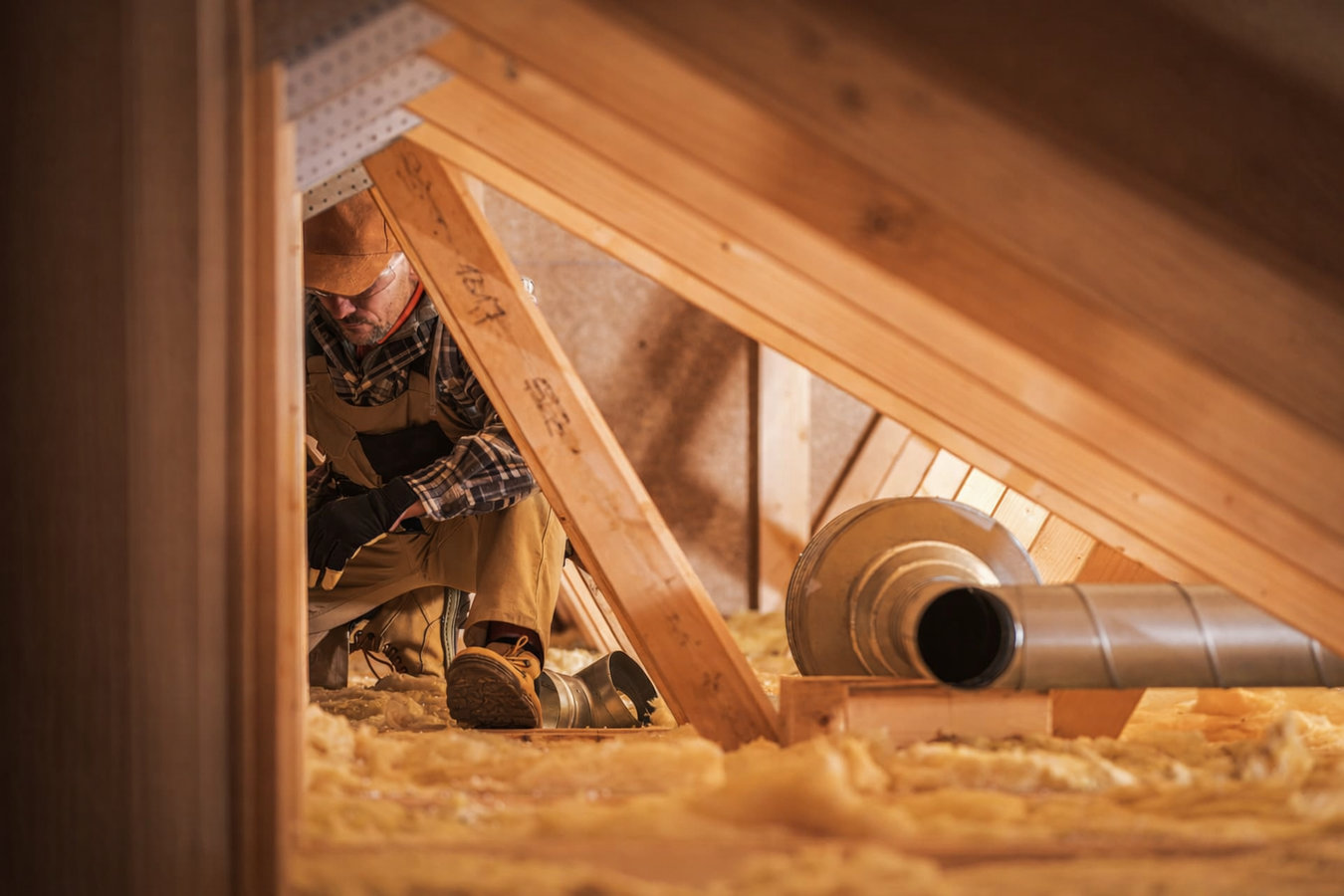
Your attic, walls, and crawl space all need proper insulation to keep heat inside during Black Hills winters. If your home was built before 1990, there is a good chance it is losing hundreds of dollars of heat every year.
Home insulation in Rapid City involves upgrading every part of your house where heat escapes - your attic, walls, crawl space, and basement - so your heating system stops working overtime and every room finally stays comfortable. Most projects are completed in one to three days without needing to leave your home.
If your energy bills spike every January and some rooms never quite warm up, your home is likely losing heat through gaps and under-insulated areas that have been there since it was built. Rapid City winters are long and cold, and an under-insulated home can cost hundreds of dollars more per season than a properly sealed one. Home insulation addresses all those areas at once, not just the attic.
For homeowners who want to tackle the attic first, we offer focused attic insulation and blown-in insulation services before expanding to other areas. Many customers start with one room and come back for the rest after seeing the difference.
If your gas or electric bill climbs sharply from October through March, your home is losing heat faster than it should. Rapid City winters are long and cold, and a poorly insulated home can cost hundreds of dollars more per season than a well-insulated one. If your bills feel out of proportion to your home's size, insulation is one of the first things worth checking.
Walk through your home on a cold January morning. If one bedroom or a room above the garage feels significantly colder than the rest of the house, that is a sign insulation is uneven or missing in that area. This is especially common in older Rapid City homes where additions were built at different times with different - or no - insulation standards.
Hold your hand near an electrical outlet on an exterior wall on a windy day. If you feel a draft, cold air is moving through gaps in your wall insulation or around the outlet box. Rapid City's frequent winds make this problem more noticeable here than in calmer climates - and it is a clear sign that both air sealing and insulation work are needed.
If you noticed ridges of ice building up along your roof's edge during or after a snowstorm, that is a classic sign of heat escaping through your attic. The escaping heat melts snow on the roof, which then refreezes at the cold eaves and can back up under shingles. This is a well-known problem in Rapid City's freeze-thaw winters.
Rapid City Insulation Company performs whole-home insulation upgrades covering your attic, walls, crawl space, and basement - using the right material for each area of your home. For attics, we install blown-in insulation to fill every gap and corner. For crawl spaces and rim joists, we use closed-cell spray foam to seal and insulate at the same time. Walls can be dense-packed through small holes if you want to avoid opening them up. Every job starts with air sealing, because adding insulation without sealing gaps first is one of the most common reasons homeowners do not see the savings they expected.
If your home is older and you are not sure where to start, we also offer evaluations that identify the highest-impact areas first - so you can prioritize the work that will make the biggest difference. Some customers start with insulation removal if the existing material is damaged or contaminated. Others move forward with a retrofit insulation approach that upgrades insulation without major renovation.
Blown-in cellulose or fiberglass to the depth required for Rapid City's climate zone - the highest-impact upgrade in most homes.
Dense-pack blown-in through small holes or batt installation during renovation - improves room comfort without opening walls.
Spray foam on crawl space walls and rim joists to stop cold air entry and moisture infiltration from below the house.
Rigid foam or spray foam on basement walls to reduce heat loss through the foundation and make the space more livable.
Sealing gaps around outlets, plumbing, attic hatches, and other penetrations before adding insulation - the step that makes the biggest difference.
Evaluating every area of your home to identify where insulation is missing or inadequate so you can prioritize the work that matters most.
Rapid City sits in Climate Zone 6, where winter temperatures regularly drop below zero and summer highs push past 90 degrees F. That 100-plus degree seasonal swing puts enormous stress on your home's thermal envelope - the shell that keeps conditioned air in. Homes here need higher insulation levels than the national average, and a contractor who quotes you minimum-code work may be leaving real comfort and savings on the table. The Black Hills region is also known for strong, persistent Chinook winds that force cold air through every small gap in a home's shell. Insulation alone will not stop that air movement - air sealing has to happen first.
Many homes in Rapid City's established neighborhoods - including areas we serve regularly like Spearfish and Box Elder - were built in the 1950s through 1980s, when insulation standards were far less demanding than today. If your home was built before 1990, there is a good chance your attic has less than half the insulation recommended for this climate, and your walls may have little to none. Upgrading insulation in an older Rapid City home typically delivers noticeable comfort improvements and meaningful energy savings - and the work itself is straightforward for an experienced contractor.
We ask a few basic questions - your home's age, what prompted your call, and whether you have noticed specific comfort problems. This is not a sales pitch - we are figuring out whether a quick attic top-up will solve your problem or whether a more thorough look is needed. We respond within 1 business day.
A crew member or estimator visits your home to look at your attic, crawl space, and any other areas of concern. We check how much insulation is already there, look for obvious gaps or air leaks, and measure the spaces that need work. This visit usually takes 30 to 60 minutes, and you should feel free to ask questions.
The crew arrives with equipment and materials and gets to work. A standard attic job takes most of a single day. Whole-house projects may take two to three days. We protect your living space from dust and debris, and a good crew cleans up thoroughly before leaving. You can stay home during the work - most of it happens in spaces you are not using.
Once the insulation is in place, there is no curing time for most types - your home starts benefiting immediately. If spray foam was used in any area, the contractor will tell you when it is safe to re-enter. Keep your estimate and any product documentation in a safe place - you will need those records if you plan to claim a federal tax credit.
Free assessment, written estimate, no pressure. We respond within 1 business day.
(605) 646-9056We seal gaps around light fixtures, plumbing, outlets, and attic hatches before the insulation goes in. Contractors who skip this step leave you with insulation that underperforms - and you pay the difference on your heating bill every winter. Air sealing first is not optional for us - it is part of the job.
We install to the insulation levels recommended for Rapid City's climate zone - not a national average that may be far lower. Homes we work on are built to handle Black Hills winters, not milder climates. The Department of Energy recommends significantly higher insulation levels for this region than what most pre-1990 homes currently have.
We know the current Black Hills Energy rebate programs for insulation upgrades and can help you capture money you are entitled to. Combining a utility rebate with federal tax credits can meaningfully reduce what you pay out of pocket. This is money that is sitting on the table - we make sure you get it.
Every quote specifies the areas, material types, and target depths - in writing, before any work begins. No verbal-only quotes, no surprises on invoice day. We want you to know exactly what you are getting before you commit. If something changes during the job, we tell you before we proceed.
Home insulation is a straightforward investment when it is done correctly. The work itself is not complicated - the difference between a job that delivers real comfort and savings and one that disappoints comes down to whether air sealing happened first and whether the contractor knows the right levels for this climate. We follow the standards set by the U.S. Department of Energy for Climate Zone 6 on every project.
Removing old, damaged, or contaminated insulation from your attic or crawl space before installing new material - required when moisture or pests have compromised the existing insulation.
Learn moreUpgrading insulation in existing walls, floors, and other areas without major renovation - ideal for older homes where opening walls is not practical.
Learn moreBlack Hills winters do not wait, and neither should you. Get your written estimate before the cold sets in and the schedule fills up.