Loading...
Serving Rapid City, SD and surrounding areas. (605) 646-9056
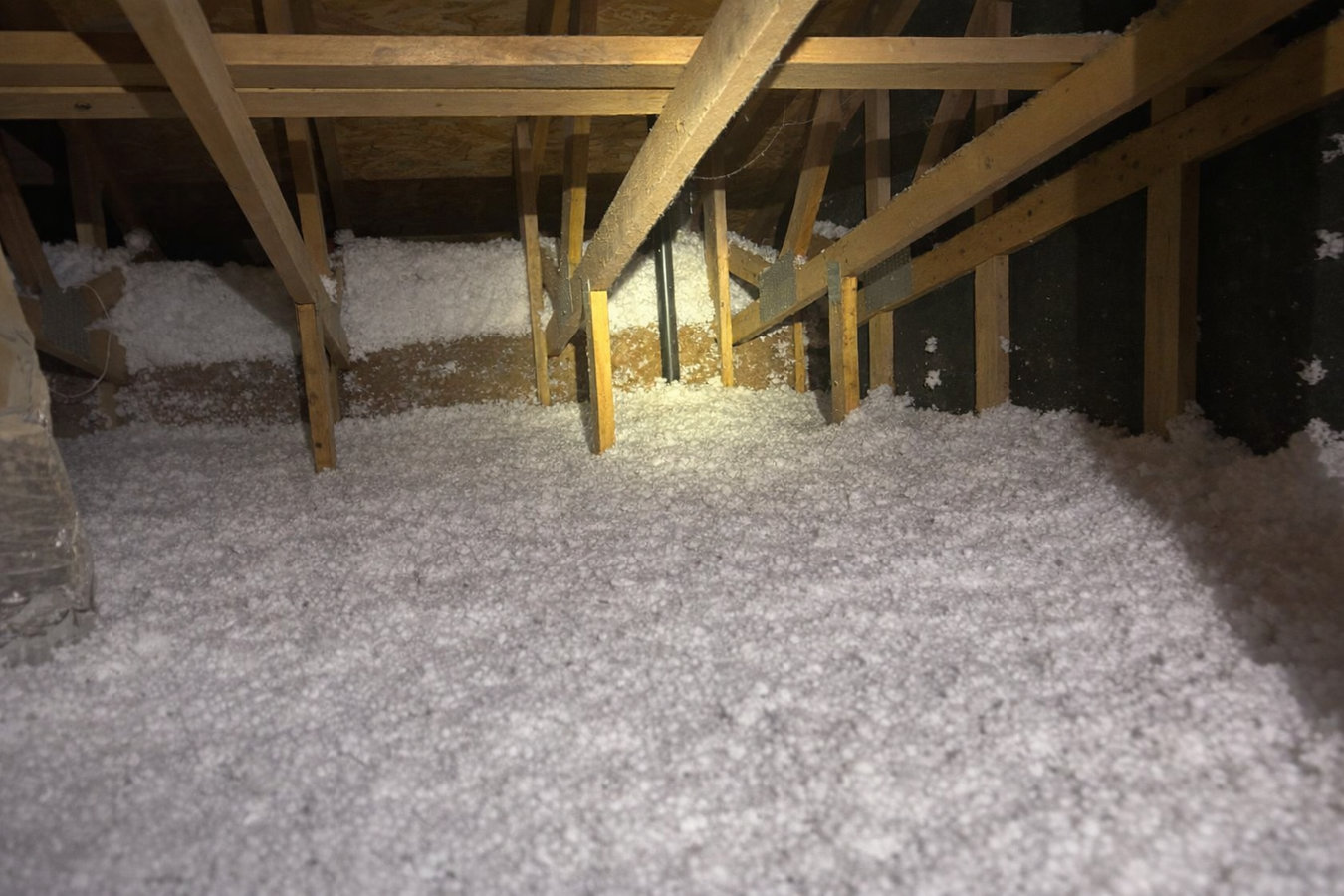
Your attic loses more heat than any other part of your home. Blown-in insulation fills every gap and corner - so your furnace stops working overtime and every room in the house finally stays warm.
Blown in insulation in Rapid City is loose-fill material - fiberglass or cellulose - installed through a large hose that fills your attic to the depth required for this cold climate. Most attic jobs are completed in two to four hours without any need to leave your home.
It is one of the most practical upgrades available for Rapid City homeowners with older homes, because the material fills corners, gaps, and irregular framing that rigid boards or batts cannot reach. If your heating bills have been climbing year over year and some rooms never quite warm up, inadequate attic insulation is usually the first place a contractor will look.
Blown-in is also commonly paired with attic insulation upgrades and a full home insulation assessment when homeowners want to address their entire thermal envelope in one project.
If your gas or electric bill climbs dramatically from November through March, your attic insulation is one of the first places to look. Rapid City winters are long and cold, and heat rises - so an under-insulated attic is essentially an open window at the top of your house. Neighbors in similar-sized homes paying noticeably less is a strong signal something is off.
If you can safely peek into your attic and see the wooden beams that form the attic floor, your insulation is almost certainly too thin. Adequate insulation for this climate should be deep enough that those beams are completely buried. Many Rapid City homeowners who check their attics for the first time are surprised by how little insulation is actually there.
Ice dams are ridges of ice that build up along the edge of your roof after a snowfall. They happen when heat escaping through an under-insulated attic melts snow on the upper roof, and that water refreezes at the cold eaves. Rapid City's freeze-thaw cycles make ice dams a real risk, and they can push water under your shingles.
Walk through your home on a cold January day and notice whether some rooms feel noticeably colder, or whether you feel a chill near the ceiling. Cold spots and drafts are often signs that heat is escaping through the attic faster than your furnace can replace it - a problem especially common in older Rapid City homes where insulation has settled.
Rapid City Insulation Company installs both fiberglass and cellulose blown-in insulation in attics, wall cavities, and hard-to-access spaces throughout the Black Hills region. Before any insulation goes in, we seal the air gaps - around light fixtures, plumbing penetrations, and attic hatches - because adding insulation without sealing first is one of the most common reasons homeowners do not see the savings they expected. If your home also needs a broader look at the full thermal envelope, we can pair blown-in attic work with a complete home insulation evaluation.
For homes where the attic has older, settled material, we also assess whether it needs to come out before new insulation goes in - which is part of our attic insulation service. Proper depth markers are placed throughout the attic so you can verify the finished job meets the target for your climate zone.
Lower moisture absorption, resists settling - a good choice for most Rapid City attics.
Made from recycled paper, strong coverage in tight spaces - suits budget-conscious homeowners who prefer eco-friendly materials.
Adding blown-in material on top of existing insulation to bring total depth up to the climate-appropriate level.
Removing degraded or contaminated existing material and starting fresh - recommended when moisture or pest activity is present.
Blown in through small holes in existing walls - improves performance in older homes without major demolition.
The most effective combination - sealing gaps first, then blowing in insulation for the biggest improvement in comfort and bills.
Rapid City sits at roughly 3,200 feet elevation and experiences some of the widest temperature swings in the country - winter lows well below zero and summer highs above 90 degrees F. The Black Hills region is also known for persistent Chinook winds that can push cold air through every small gap in a home's exterior. That combination - extreme cold, wide swings, and wind-driven infiltration - means your attic insulation has to work harder than it does in almost any other region. Blown-in material is particularly suited here because it fills the irregular cavities and corners that rigid board cannot reach, and it can be installed to any depth needed for this climate zone.
A large share of Rapid City's housing stock was built before 1990, when insulation standards were far lower than they are today. Homeowners in established neighborhoods - including those we serve regularly in Sturgis and Box Elder - often discover their attics have only a few inches of settled insulation that has never been updated. Adding blown-in material to bring those homes up to the levels recommended by the U.S. Department of Energy for this climate zone is one of the most cost-effective comfort and efficiency improvements available.
We ask a few basic questions - your home's age, approximate attic size, and what prompted your call. We respond within 1 business day and can usually schedule an in-home visit within a few days.
A crew member visits your attic, measures the existing insulation depth, checks for air leaks, and reviews ventilation. This takes 30 to 45 minutes. You get a written estimate that explains exactly what we recommend and why.
We park a truck outside, run the blowing hose into your attic, seal any air gaps first, then blow insulation to the correct depth across the full attic floor. Most jobs take two to four hours. The machine is loud while running.
Before we leave, we show you the depth markers in the attic - small stakes that confirm the insulation reached the right depth. The attic hatch gets properly insulated too. Your home is ready to use right away.
Free estimate, no obligation. We respond within 1 business day.
(605) 646-9056We seal gaps around light fixtures, plumbing, and attic hatches before the insulation goes in. Contractors who skip this step leave you with insulation that underperforms - and you pay for the difference on your heating bill every winter.
We place verification stakes throughout your attic so you can look up there yourself and confirm the depth is correct. You should never have to take a contractor's word for it - and with us, you never do.
We install to the insulation levels recommended for Climate Zone 6 - the designation for Rapid City - not a national average that may be far lower. Homes we work on are built to handle Black Hills winters, not milder climates.
Every quote specifies the area, material type, and target depth - in writing, before any work begins. No verbal-only quotes, no surprises on invoice day. We want you to know exactly what you are getting before you commit.
Blown-in insulation is a straightforward job when it is done correctly. The difference between a job that delivers real savings and one that disappoints almost always comes down to whether air sealing happened first and whether the depth was actually verified. North American Insulation Manufacturers Association guidelines define those standards, and we follow them on every project.
A whole-home insulation evaluation covering your attic, walls, crawl space, and basement for homeowners who want to address every area at once.
Learn moreFocused attic insulation service - including air sealing, ventilation checks, and depth verification - for the area of your home that loses the most heat.
Learn moreBlack Hills winters do not wait - and neither should you. Get a written estimate before the cold sets in and your schedule fills up.