
Loading...
Serving Rapid City, SD and surrounding areas. (605) 646-9056
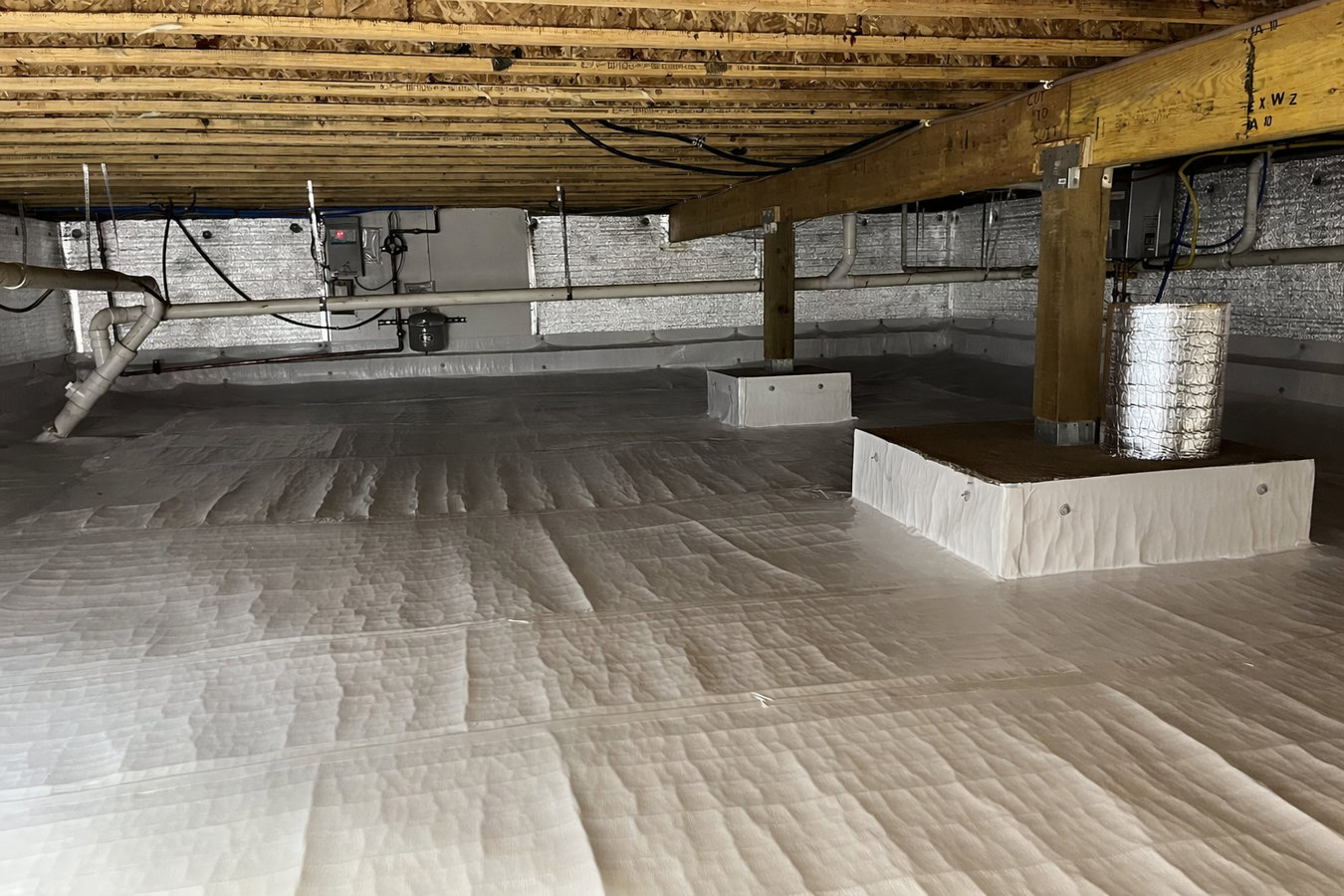
Ground moisture rising into your crawl space silently damages floor joists, weakens insulation, and drives up your heating bills. A properly installed vapor barrier stops it at the source before Rapid City winters and spring snowmelt can cause real damage.
A crawl space vapor barrier in Rapid City is a heavy-duty plastic sheet installed across the floor and up the foundation walls of your crawl space to block moisture from rising through the soil - most installations on a standard single-family home take one to two days. Without it, water vapor from the ground moves freely upward into your floor framing, where it saturates insulation, encourages mold growth, and slowly weakens the wood. The barrier creates a continuous seal between the soil and your home's structure.
If your Rapid City home has a crawl space and has never had this work done, there is a real chance moisture has been working on your floor joists for years. Homes built before 1980 are particularly vulnerable because crawl space moisture protection was not standard practice at that time. A vapor barrier is often the first step before adding or replacing crawl space insulation, because insulation laid over a damp, unprotected floor will absorb moisture and lose most of its effectiveness.
The quality of the installation matters as much as the material itself. A vapor barrier that is loosely laid with open seams does not stop moisture - it just delays it. A properly installed barrier has overlapping seams that are taped flat and edges that run up the walls and are secured so nothing shifts over time.
A damp, earthy odor - especially noticeable in the morning or after a rainy day - is almost always ground moisture rising from your crawl space. In Rapid City, this smell is especially common in spring after snowmelt saturates the soil around your foundation. The odor means moisture is moving freely from the soil into your living space, and a vapor barrier is the most direct fix.
Walk across your floors and pay attention to any spots that feel softer than the rest or that bounce slightly underfoot. This is a sign that the wood floor joists below are absorbing moisture and beginning to weaken. In older Rapid City homes - those built before 1980 - this kind of damage is more common because original crawl space protection was minimal or absent entirely.
After Rapid City's spring snowmelt, take a flashlight and look into your crawl space through the access hatch. If you see water pooling on bare soil, condensation on pipes or wood, or any visible mold growth, those are clear signs that moisture is not being managed. A quick look from the hatch opening - without crawling in yourself - can tell you a lot.
If your heating costs have increased over the years without a clear explanation, moisture in your crawl space may be part of the reason. Wet insulation loses much of its ability to hold heat, which forces your furnace to work harder through Rapid City's long winters. Protecting the crawl space gives your insulation a chance to work the way it was designed to.
Rapid City Insulation Company installs heavy-duty vapor barrier sheeting as a standalone service or as part of a larger crawl space improvement. Every installation starts with a physical assessment - measuring the space, checking for existing moisture damage or debris, and noting anything that needs to be addressed before the barrier goes down. The crew then lays the sheeting across the entire floor, overlapping seams by at least a foot and taping them flat, then runs the material up the foundation walls and secures the edges. No bare soil is left exposed when the job is done.
For homes where moisture problems are more serious, we can also discuss full crawl space encapsulation - which goes further than a vapor barrier alone by sealing the walls and vents to create a fully conditioned space. A vapor barrier installation pairs naturally with vapor barrier installation for basement and wall applications, and works best alongside crawl space insulation when the goal is to address both moisture and heat loss at the same time.
Heavy-duty sheeting across the full crawl space floor with taped seams and secured wall edges - the core protection for most Rapid City homes.
Identifying existing damage, clearing debris, and addressing drainage issues before the barrier goes in - so the new installation starts clean.
Running the barrier up the foundation walls rather than stopping at the floor edge - the difference between a partial fix and a properly sealed crawl space.
A more complete solution for homes with persistent moisture problems, sealing vents and walls in addition to the floor for year-round moisture control.
Rapid City sits at the eastern edge of the Black Hills and experiences some of the most dramatic temperature swings in the country - a 50-degree change in a single day is not unusual. Those swings cause the soil under your home to repeatedly freeze and thaw, pushing moisture upward with each cycle. This means a vapor barrier is not just a nice upgrade here - it is working hard every winter and spring to protect your floor structure. The Black Hills snowpack typically melts rapidly in late March and April, saturating the ground around foundations and creating the most intense moisture exposure of the year for unprotected crawl spaces. Homeowners in Box Elder and Sturgis face the same seasonal moisture patterns and benefit from the same protection.
Many homes in Rapid City's established neighborhoods - particularly in the areas around Canyon Lake, West Boulevard, and the older sections of the North Side - were built between the 1950s and 1970s, when crawl space moisture protection was minimal or nonexistent. Portions of Pennington County also sit on clay-heavy soils that expand when wet and contract when dry, which can shift a foundation slightly and create small gaps in older or poorly installed vapor barriers over time. A quality installation uses heavy-duty sheeting with properly secured seams that can handle that ground movement for 20 years or more. The EPA's guidance on moisture control consistently identifies crawl space vapor barriers as one of the most cost-effective ways to protect indoor air quality and structural integrity in older homes.
When you reach out, we will ask a few basic questions - the size of your home, any moisture signs you have noticed, and how your crawl space is accessed. We reply within one business day and schedule a convenient time to come out.
A crew member enters your crawl space, measures the square footage, checks for existing moisture damage and debris, and notes anything that needs to be addressed before the barrier is installed. This visit is free and typically takes 30 to 60 minutes. You get a written estimate, not a phone guess.
The crew clears any loose debris, rolls out and cuts the sheeting to fit the space, overlaps all seams by at least a foot and tapes them flat, then runs the barrier up the foundation walls and secures the edges. Most standard crawl spaces are completed in one full day. You do not need to leave your home.
Before leaving, the crew will show you photos of the finished installation inside the crawl space - the sealed seams, the wall coverage, all of it. You will have a clear record of what was done without having to crawl in yourself. We also tell you what to watch for going forward.
Free on-site estimate. Written quote after we physically inspect your crawl space. No phone guesses, no pressure.
(605) 646-9056We use sheeting designed for climates with extreme temperature swings and seasonal freeze-thaw cycles - not the thin material from a hardware store that tears and degrades within a few years. In Rapid City, where the barrier works hard every single winter and spring, the thickness and quality of the material makes a real difference in how long the installation holds.
Rapid City Insulation Company serves homeowners in all 12 communities across the Black Hills and surrounding region - from Rapid City and Box Elder to Sturgis, Spearfish, and beyond. We know the soil conditions, the housing stock, and the seasonal moisture patterns that make vapor barrier work here different from a milder climate.
Every installation is documented with photos taken inside the crawl space. You will see the finished seams, wall coverage, and overall installation quality without having to go in yourself. That documentation is your proof of a complete job, and it stays on file if you ever need it for a home sale or warranty claim.
The City of Rapid City Development Services enforces local permit requirements for any work that goes beyond a standard barrier installation. We handle those details so you do not have to, and we coordinate the permit before work begins so nothing holds up your project.
The combination of local climate knowledge and a documented installation process is what separates a vapor barrier that performs for 20 years from one that needs to be redone in five. We work the same way on every job, whether it is a small ranch-style crawl space or a large older home with multiple access points.
Vapor barrier solutions for basements and wall assemblies, extending moisture protection to parts of the home beyond the crawl space floor.
Learn moreInsulating the crawl space ceiling or walls to reduce heat loss after the moisture problem has been addressed with a proper vapor barrier.
Learn moreSpring is the hardest stretch for unprotected crawl spaces in the Black Hills. Schedule your free on-site estimate now and get protected before the ground thaws.