
Loading...
Serving Rapid City, SD and surrounding areas. (605) 646-9056
Rapid City Insulation Company serves Lead, SD homeowners with retrofit insulation, attic upgrades, and crawl space insulation for mining-era homes that are 80 to 130 years old and have never been brought up to current energy standards. We reply to every Lead inquiry within 1 business day.
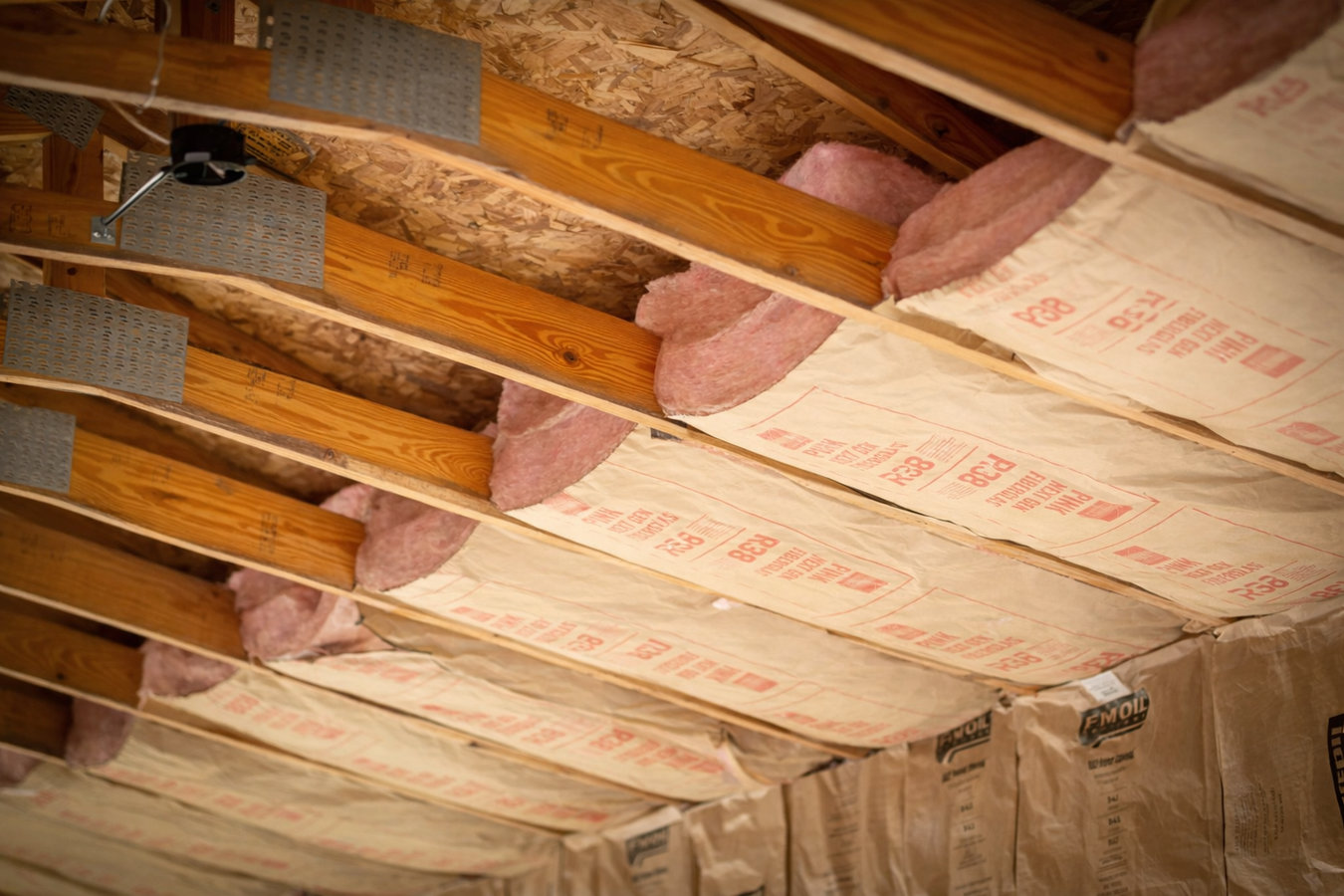
Most homes in Lead were built when insulation was either minimal or not standard at all - walls filled with newspaper, attics with a few inches of original batt, and crawl spaces with nothing. Retrofitting a home that has been occupied for 80 to 130 years requires removing or working around what is there, sealing bypasses that were never addressed, and choosing materials that fit the framing configurations of a different era. See what is involved in a proper retrofit insulation project to understand what that process looks like from start to finish.
Lead receives over 150 inches of snow in a typical year, and the older homes that line its steep streets carry that load on roof structures built generations ago. When attic insulation is thin or absent, heat loss from the living space rises into the attic and accelerates snowmelt at the roof deck, forming ice dams along the eaves. Bringing attic depth to Climate Zone 6 standards - ten to fourteen inches minimum, more where load-bearing constraints allow - reduces both the ice dam risk and the monthly heating bill.
Homes in Lead often sit on very small, steep lots where the crawl space - when one exists - is low-clearance and difficult to access. Spring snowmelt running off the hillsides above and around these properties sends water toward foundations that were built a century before waterproofing became standard. Insulating the floor assembly and sealing the perimeter foundation walls stops cold air infiltration and reduces the moisture load on framing that has already survived a long time and deserves to survive longer.
Lead's older wood-frame homes were built with wood-to-wood connections that shrink and open over decades of heating and cooling cycles. Every gap around a plumbing penetration, at the top plate, or above an interior wall is a path for warm air to escape and cold air to enter. Air sealing before adding insulation is what separates a job that actually reduces bills from one that just adds material.
The heavy spring snowmelt that pours off Lead's steep hillsides each year saturates the ground around and under older homes. Without a ground cover vapor barrier in the crawl space, that moisture rises through the soil and enters the wood framing from below - a slow, invisible process that leads to rot, mold, and compromised structural members. A properly installed barrier over the crawl space floor is the foundation of any moisture management plan for a Lead hillside home.
For Lead homes with irregular attic geometry - steep pitch roofs, dormers, knee walls, or attic framing that has been modified over the years - blown-in loose-fill reaches every corner without leaving the gaps that cut-to-fit batt leaves behind. It is also the most practical method for topping up an older attic without disturbing the existing framing or requiring a full tear-out of what is already there.
Lead sits at about 5,300 feet elevation in Lawrence County, in the northern Black Hills. It receives some of the heaviest snowfall in South Dakota - commonly over 150 inches per year - and the winters are long, with hard frost from October through April. Ground frost penetrates several feet deep, and the freeze-thaw cycles that follow each winter repeatedly stress foundations, concrete flatwork, and any moisture that has found its way into the building envelope. The steep, narrow valley that the town occupies means drainage follows the hillsides rather than flat ground, directing runoff toward foundations and under crawl spaces during every spring thaw.
What makes Lead genuinely different from most places we work is the age of the housing stock. This was a company town built for miners at the Homestake Gold Mine, and nearly all of the residential homes were constructed between the late 1800s and mid-1900s. Many are still owned by the same families and have never received a significant energy upgrade. Original single-pane windows, no wall insulation, and attics with a few inches of original material - if any at all - are common findings during assessment. Working in Lead requires experience with pre-modern construction details: framing configurations, foundation types, and clearance conditions that a contractor who has only worked on newer builds will not recognize or know how to handle properly.
The homes we work on most often in Lead are the wood-frame single-family houses built on the hillside streets above the old Homestake Mine - properties where the lot drops sharply behind the house, the crawl space has less than 18 inches of clearance in some spots, and the original framing uses nominal lumber sizes that no longer match modern standard dimensions. Working in these homes requires patience and the right equipment for tight access. We coordinate permit requirements with the City of Lead for projects that require them, and we are familiar with the building conditions and expectations specific to this community.
Lead is a well-known Black Hills destination, adjacent to Deadwood, home to historic casinos and one of the most visited towns in the state. Terry Peak Ski Area is just outside Lead, bringing winter recreation traffic through the area from November through March. The former Homestake Mine site is now the Sanford Underground Research Facility, which has brought some economic activity back to the area. Alongside Lead, we serve the neighboring community of Deadwood and the wider Lawrence County area, as well as homeowners in Sturgis to the east.
Call or send us a message online and we will respond within 1 business day. Let us know up front if the home is very old or if you suspect the attic or crawl space has not been touched in decades - that helps us come prepared with the right materials and tools for the assessment.
We inspect the attic, crawl space, and any other areas that concern you - no charge. Older Lead homes regularly turn up conditions during assessment that change the scope: original materials that need removal, bypasses that are not visible without getting into the attic, or crawl space access that requires special equipment. We do not commit you to a price until we have seen the actual conditions.
Air sealing happens before any insulation material goes in - this is the step that most contractors skip, and it is the step that determines how much the finished job actually reduces your heating costs. Installation in Lead homes typically takes one to two days depending on scope, access conditions, and whether removal of degraded material is included.
We walk through what was done and provide an itemized receipt separating materials from labor - documentation that is useful for federal tax credits on qualifying retrofit work and for any insurance-related inquiries. If permit inspections are required, we coordinate those before the job is considered closed.
We serve Lead, SD and Lawrence County. Free on-site estimate, honest scope, no pressure - just a clear picture of what your home needs.
(605) 646-9056Lead is a small city of just under 3,000 residents in Lawrence County, sitting at roughly 5,300 feet in the northern Black Hills of South Dakota. The town grew up around the Homestake Gold Mine, which operated from 1876 to 2002 and was the deepest and most productive gold mine in North American history. The physical footprint of that operation still shapes the town today - streets follow the contours of the hillside rather than a flat grid, lots are small and irregular, and the residential neighborhoods sit tight against the terrain. Most homes were built during the mining era, giving Lead one of the oldest residential housing stocks in South Dakota. Lead's steep, narrow valley setting is unlike most Black Hills communities, and the homes reflect that unique topography.
Since the mine closed, Lead has shifted toward tourism and recreation. The former mine site is now the Sanford Underground Research Facility, a world-class physics laboratory. Terry Peak Ski Area draws visitors through the winter, and the town's proximity to Deadwood keeps tourism steady through summer and fall. Most Lead residents are long-term homeowners with a direct stake in maintaining homes that have been in families for generations. The housing stock is predominantly single-family wood-frame homes with a mix of stone foundations on the oldest properties. For homeowners in the surrounding area, we also serve Deadwood next door and Spearfish further up the canyon.
High-performance spray foam that seals and insulates in a single application.
Learn moreLoose-fill insulation blown into attics, walls, and hard-to-reach cavities.
Learn moreCrawl space insulation that prevents moisture problems and cold floors.
Learn moreProfessional air sealing that stops drafts and improves HVAC efficiency.
Learn moreBasement insulation that keeps lower levels warm, dry, and comfortable.
Learn moreDense closed-cell spray foam with the highest R-value per inch available.
Learn moreFlexible open-cell spray foam ideal for interior walls and soundproofing.
Learn moreAttic air sealing that blocks conditioned air from escaping through the top.
Learn moreHeavy-duty vapor barriers that protect crawl spaces from ground moisture.
Learn moreVapor barrier installation throughout your home for moisture management.
Learn moreRetrofit insulation added to existing homes without major renovation work.
Learn moreCommercial insulation services for offices, warehouses, and industrial spaces.
Learn moreContact Rapid City Insulation Company for a free estimate in Lead, SD - we know what 80- to 130-year-old Black Hills homes need and we come prepared to find it.