Loading...
Serving Rapid City, SD and surrounding areas. (605) 646-9056
If your Rapid City commercial building is hard to heat in winter or cool in summer, poor insulation is likely the cause. We install spray foam, blown-in, and rigid board insulation for businesses across the Black Hills - cutting energy costs and fixing the comfort problems that distract your team and drain your budget.
Commercial insulation in Rapid City means installing spray foam, blown-in loose fill, or rigid board material in a business or commercial property to slow heat movement through the building envelope - most mid-size projects take one to three days on-site and deliver measurable energy savings within the first full heating or cooling season. The work targets the areas where heat loss is greatest: roof assemblies, exterior wall cavities, mechanical spaces, and any penetrations where pipes, wires, or structural members pass through the envelope. Every gap left unsealed becomes a channel for Rapid City's winter wind, which is why air sealing is part of every project we complete.
Many commercial buildings in Rapid City were built between the 1960s and 1980s under insulation standards that are well below what South Dakota's current climate zone requires. If your building is more than 30 years old and has never been assessed, there is a reasonable chance it is costing more to heat and cool than it should. Commercial insulation work is often coordinated with spray foam insulation projects when the goal is to seal the building envelope comprehensively, not just fill cavities with material.
The insulation type matters as much as the quantity. Spray foam seals and insulates simultaneously, which makes it the right choice for penetrations, rim joists, and areas where a tight air seal is the priority. Rigid board and blown-in material are better suited for large wall and roof cavities where coverage and depth are what matters most. A good assessment identifies which approach belongs where before any work begins.
If your energy costs spike sharply each October and stay high through April, your building is likely losing heat faster than it should. Rapid City winters are long and cold, and a building with inadequate insulation can cost significantly more to heat than one that is properly sealed. If bills have been creeping up year over year, insulation is one of the first places worth checking.
Rapid City's frequent high winds make air infiltration a real problem in older commercial buildings. If you or your employees notice cold air moving through the space when the wind picks up - near exterior walls, around outlets, or at the base of windows - that is a sign gaps exist in your building envelope that insulation and air sealing could fix.
Ice dams happen when heat escapes through a poorly insulated roof, melts snow on the upper part of the roof, and refreezes at the cold eaves. They are a common sight on older commercial buildings in Rapid City after heavy snowfall. Beyond being a visual clue, ice dams can force water under roofing material and cause serious interior damage over time.
If one part of your building is always too cold in winter or too hot in summer no matter how hard the HVAC system works, uneven or missing insulation is often the cause. This is especially common in buildings that have been added onto over the years, where original insulation was never extended into the new sections properly.
Rapid City Insulation Company installs commercial insulation for a range of building types - offices, warehouses, light industrial spaces, retail buildings, and mixed-use properties. Every project starts with a site visit and a thorough look at the building envelope: roof assembly, wall cavities, mechanical spaces, and any area where the envelope is compromised. We do not recommend a product type until we understand where the heat is actually going. For buildings with significant penetrations and hard-to-reach spaces, spray foam is the right tool - it expands to fill complex geometries and creates a continuous air barrier at the same time. For large wall and ceiling cavities, blown-in or rigid board delivers the coverage depth and R-value this climate zone demands.
For buildings that need a comprehensive envelope upgrade, commercial insulation work pairs naturally with spray foam insulation for airtight penetration sealing and with closed-cell foam insulation where maximum R-value per inch and moisture resistance are the priorities - common in roof assemblies and below-grade wall sections across Rapid City's commercial building stock.
Best for penetrations, rim joists, rooftop curbs, and anywhere a continuous air seal is as important as the R-value - the go-to choice for complex commercial envelopes.
Ideal for large attic and ceiling cavities in commercial buildings where coverage area is wide and the goal is reaching full insulation depth across every square foot.
Used on exterior walls, under roofing, and in below-grade applications where a durable, moisture-resistant panel is needed as part of a continuous insulation system.
Adding insulation to existing commercial buildings without full renovation - drilling, injecting, and patching to bring older Rapid City building stock up to current performance levels.
Rapid City sits at the eastern edge of the Black Hills and experiences some of the most dramatic temperature swings in the continental United States. Temperatures can drop from 60 degrees to below zero within 24 hours during a Chinook wind reversal, and summer highs regularly push past 95 degrees. That range means your building's insulation is working hard in both directions all year, and any weak spots show up fast on the energy bill. South Dakota's climate zone sets higher insulation performance requirements than most of the southern and coastal United States, which means a building renovation that triggers a permit will need to meet current standards - sometimes more than the original plan accounted for. Businesses in Deadwood, SD and the surrounding Black Hills communities face the same climate demands and aging commercial stock that make insulation upgrades a practical priority rather than a nice-to-have.
Rapid City's older commercial building stock - much of it constructed in the 1960s through 1980s - compounds the climate challenge. Many of these buildings have little to no insulation in their wall cavities, or have original materials that have settled, compressed, or been damaged by moisture over the decades. The Black Hills region averages significant snowfall per year, and the repeated cycle of freezing and thawing drives moisture into wall assemblies and roof systems, degrading insulation from the inside without any visible sign from the interior. Businesses in Spearfish, SD deal with the same freeze-thaw moisture risks, and a vapor management plan is as important as the insulation material itself in this climate. The U.S. Department of Energy's commercial building resources outline the energy savings potential for buildings in cold climates like Rapid City.
We ask about your building type, approximate size, and what is prompting the call. Within one business day we schedule a site visit - at no charge - to look at the building in person before any proposal is written.
We walk through the building and examine the areas most likely to be losing energy - the roof assembly, exterior walls, and mechanical spaces. We may use a thermal imaging camera to spot problem areas not visible to the eye. Within a few days you receive a written proposal explaining what we recommend, why, and what it will cost.
For most commercial insulation projects in Rapid City, we apply for a building permit through the City of Rapid City Building Services before work begins. This step means the work will be inspected and verified to meet current standards. We handle the permit process entirely - you do not need to manage it.
The crew works through the building systematically - sealing penetrations, filling cavities, and verifying coverage as they go. Most mid-size jobs complete in one to two days. After installation we walk you through the finished work, and if a permit was pulled, a city inspector verifies the work before final sign-off.
Free on-site estimate. We tell you what your building actually needs - no inflated scope, no pressure.
(605) 646-9056Rapid City Insulation Company serves 12 communities across South Dakota, Wyoming, and Nebraska - handling both residential and commercial projects. That cross-market experience means we understand the building science behind commercial envelope performance, not just the material side. We have worked on older office buildings, warehouses, and mixed-use properties throughout the Black Hills region.
We handle the permit process through the City of Rapid City Building Services on every commercial project that requires one. A contractor who pulls permits and welcomes inspections is one who stands behind the work. You end up with documented proof the installation meets current South Dakota code - not just someone's word for it.
Rapid City's climate zone sets higher performance requirements than most of the country. We specify insulation levels and air sealing details based on this climate, not a national average. The Insulation Contractors Association of America standards inform how we approach commercial installations, giving you a benchmark beyond the minimum code requirement.
Most commercial insulation work happens above drop ceilings, inside wall cavities, in mechanical rooms, or on the roof - areas that are not occupied. If spray foam is part of the job, the treated area needs to be cleared for a few hours during and after application, but the rest of your building stays open. We schedule around your business hours when possible and give you a clear timeline before work begins.
Commercial insulation is an investment that pays back on the utility statement every month for years after the work is done. We take the coverage details, permit process, and thermal bridging prevention seriously - because those are the details that determine whether a building actually performs better or just looks like it was upgraded.
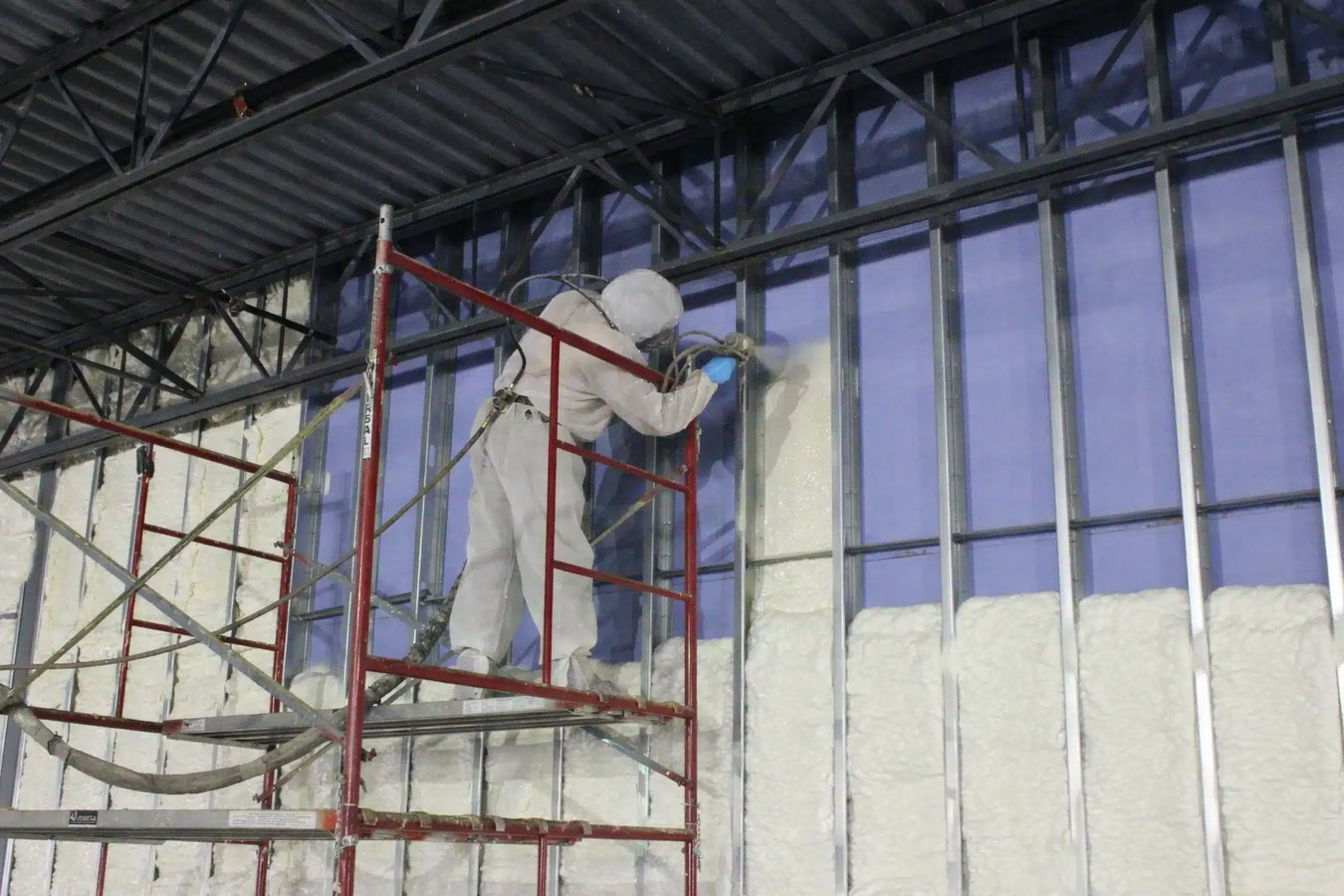
Two-component spray foam that expands to fill cavities, seal penetrations, and create a continuous air barrier - the highest-performance option for commercial building envelopes in Rapid City's climate.
Learn moreDense, moisture-resistant closed-cell spray foam delivering maximum R-value per inch - used in commercial roof assemblies, below-grade walls, and anywhere both thermal and moisture control are required.
Learn moreCall or submit a form today. We respond within one business day and can typically schedule your site assessment within the week.