Loading...
Serving Rapid City, SD and surrounding areas. (605) 646-9056
If your home was built before 1980, it is almost certainly under-insulated by today's standards. Retrofit insulation adds what is missing - without tearing out walls or doing a full renovation - so every room holds heat the way it should through a Rapid City winter.
Retrofit insulation in Rapid City means adding insulation to an existing home - through blown-in material in the attic, dense-pack fill in wall cavities, or spray foam around rim joists and penetrations - without tearing out walls or doing major renovations; most attic-only jobs wrap up in a single day and the difference in comfort is noticeable within the first cold snap. The term "retrofit" simply means the work is done after the home is already built, using techniques that access existing cavities through small openings rather than opening up surfaces. The goal is to bring an older home's thermal performance up to where it should be for this climate, not where it was when it was built 50 or 60 years ago.
Rapid City's core neighborhoods - including West Boulevard, Robbinsdale, and Canyon Lake - are filled with homes from the 1940s through 1970s that were built when insulation standards were a fraction of what they are today. If your home sits in one of those areas, or anywhere in the city with a build date before 1980, there is a good chance it is losing heat in winter and letting it in during summer in ways that show up on your energy bills every month. Retrofit insulation is often paired with home insulation assessments to identify every area where performance is falling short before any work begins.
A proper retrofit project also includes air sealing - filling gaps around pipes, wires, and framing - before any new insulation goes in. In Rapid City's consistently windy climate, skipping that step means insulating a leaky envelope, which limits how much of the benefit you actually feel and keep.
If your gas or electric bill climbs dramatically during Rapid City's coldest months and your neighbors in similar-sized homes are paying noticeably less, under-insulation is one of the most common reasons. Heat rising through an under-insulated attic forces your furnace to run longer every night from November through March, and the bills reflect every degree of lost heat.
If one or two rooms are always colder than the rest of the house - especially top-floor rooms or rooms with exterior walls - that is a strong sign those spaces are not insulated well. In Rapid City's climate, a poorly insulated bedroom can feel noticeably colder than the rest of the house on a bitter January night. That is a building problem, not a thermostat problem.
Hold your hand near an electrical outlet on an exterior wall on a cold day. If you feel a draft, cold air is moving through the wall cavity and into your living space. This is common in older Rapid City homes where wall insulation was never installed or has settled and compressed over the decades, leaving gaps where outside air travels freely.
Ice dams - the ridges of ice that build up along your roof's edge after a snowfall - are a clear sign your attic is not holding heat. Heat escaping through the attic warms the roof deck, melts snow at the top, and that water refreezes at the cold eaves. Rapid City's freeze-thaw cycles make ice dams a recurring problem for homes with inadequate attic insulation, and they can cause serious roof and gutter damage over time.
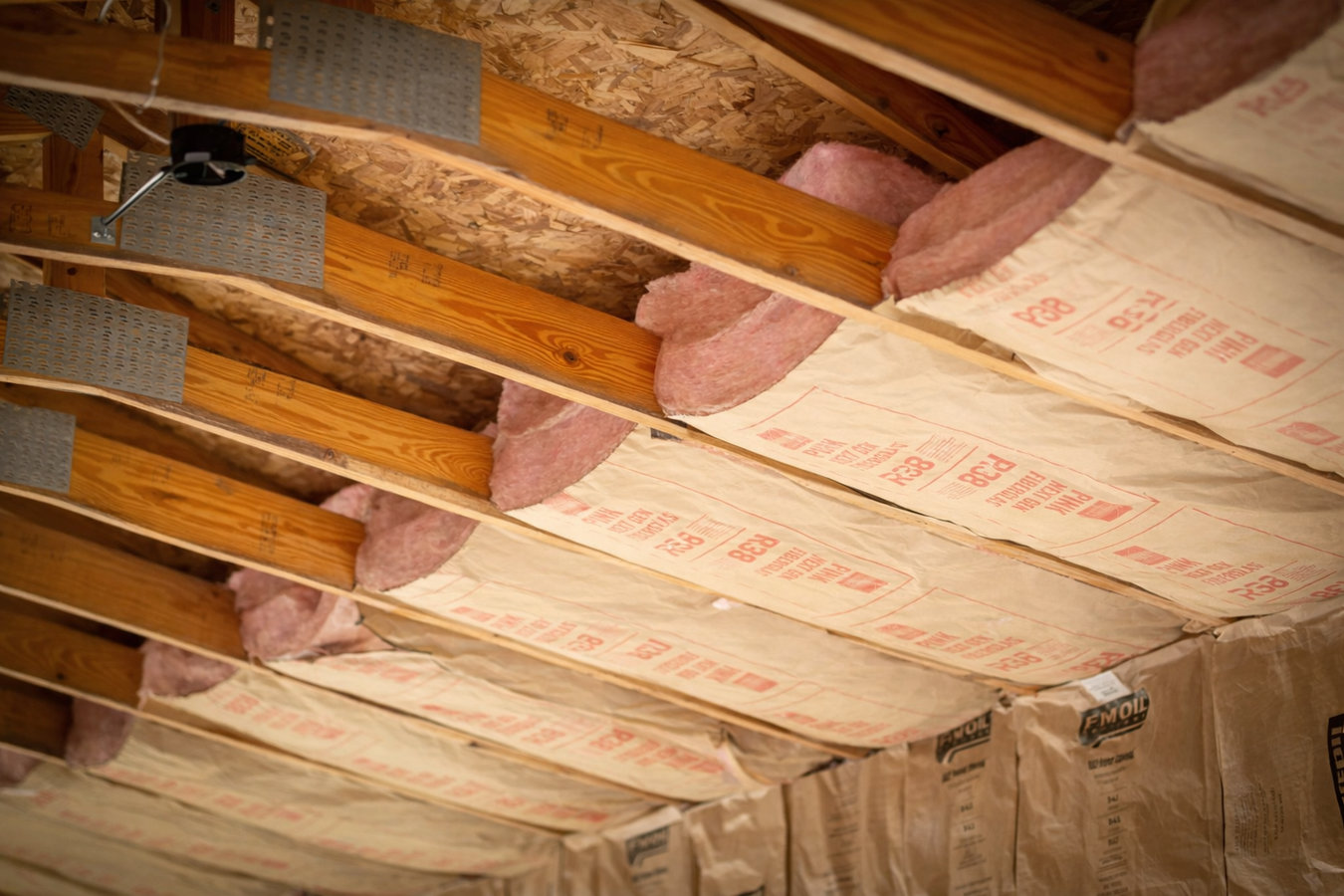
Rapid City Insulation Company handles retrofit insulation in all the areas where older homes typically fall short: attics, wall cavities, crawl spaces, and rim joists. Every project starts with a physical walk-through - checking what is already there, identifying bypasses and gaps, and understanding the building's specific weak points before recommending anything. We use a blowing machine and hose to place loose-fill material across attic floors, reaching full depth across the entire space including near eaves and around obstructions. For walls, we drill small access holes in the siding or interior drywall, inject dense-pack material to fill the cavity, and patch the holes cleanly so they are ready for paint.
Air sealing is part of every attic retrofit we do - we seal bypasses around recessed lights, plumbing penetrations, and framing before the insulation goes in. This matters especially in Rapid City, where wind-driven air infiltration is a major source of heat loss that insulation alone will not fix. For homeowners looking at the full picture, retrofit work often connects with commercial insulation services for business properties and with home insulation assessments when the goal is a comprehensive whole-house upgrade plan.
The most common retrofit job - adding cellulose or fiberglass blown-in material to bring attic depth up to the level Rapid City's climate requires, including air sealing first.
Fills uninsulated or under-insulated wall cavities through small drilled holes - ideal for older Rapid City homes where walls were built with little or no insulation.
Cuts air infiltration at the framing where your floor meets the foundation - a common heat loss point in older homes that is fast and effective to address.
Adds insulation to crawl space floors, walls, or basement rim joists for homes where the underfloor has been left uninsulated or where original material has degraded.
Rapid City sits in a climate zone where winter temperatures regularly drop below zero and wind chill pushes the felt temperature even lower. Homes here need more insulation than homes in moderate climates - and a contractor who installs only the code minimum may still leave your home underperforming for this specific environment. The city's housing stock compounds this: a significant share of residential properties in established neighborhoods were built between the 1940s and 1970s under standards that are now well below what is considered adequate. Freeze-thaw cycles also degrade older insulation over time, meaning homes that had decent coverage when they were built may have compressed or moisture-damaged material that no longer performs. Homeowners in Lead, SD and the surrounding Black Hills communities face the same pattern of aging housing stock and harsh winters that makes retrofit work especially high-value.
Wind is a factor that separates Rapid City from many other cold-climate markets. The Black Hills region sees sustained high winds throughout winter and spring, which means air infiltration - cold outside air pushing through gaps in walls and around framing - is an ongoing source of heat loss that insulation alone will not solve. A thorough retrofit project in this area always includes air sealing alongside the insulation material. Homeowners in Sturgis, SD face the same wind exposure, and the combination of air sealing plus added insulation is what delivers the full comfort and bill savings that a material-only job cannot match. The federal tax credit - up to 30% of insulation material costs - makes this a good time to act, and South Dakota has no state income tax, so the federal credit is the primary incentive available here.
When you reach out, we ask a few basic questions about your home - age, size, and what has been bothering you. We respond within one business day and schedule an in-home visit before giving you any price, because the actual condition of your insulation varies a lot from house to house.
We walk through your home, inspect the attic, walls, and crawl space, and check what is already there. This visit usually takes 30 to 60 minutes. You get a written estimate that breaks down exactly what areas will be treated, what material goes in, and the total cost - including whether air sealing is part of the scope.
You do not need to do much. Clear a path to your attic hatch or crawl space entry, and move items stored directly in the attic if possible. You can stay home during the work. If a permit is required for your project, we handle pulling it through the City of Rapid City Building Services office.
For attic work, we set up the blowing machine outside and run a hose up to the attic - the machine is noisy while running but typically finishes in a few hours. Wall insulation takes longer due to drilling and patching. We clean up before leaving, and all drilled holes are patched and ready for paint.
Free estimate. No pressure. We tell you what we find and what it will cost - you decide from there.
(605) 646-9056A large share of the homes we work on were built in the 1940s through 1970s - the era when Rapid City grew fastest and insulation standards were lowest. We know what to expect inside the walls of a West Boulevard ranch or a Canyon Lake split-level, and we come prepared for the access challenges those homes present.
In Rapid City's windy climate, insulation without air sealing is only half a solution. We seal bypasses around pipes, wires, and recessed lights before every attic job. That step is what actually stops the wind-driven heat loss that shows up on your bill every January - and it is built into our retrofit scope, not added as an upsell.
We work in Rapid City and across 12 service areas in South Dakota, Wyoming, and Nebraska. Homeowners throughout the Black Hills region - including Lead, Sturgis, and Spearfish - count on us for retrofit work on older homes that the local climate has been harder on than most. That range of experience means we have seen almost every insulation situation an existing home can present.
As of 2024, federal tax credits cover up to 30% of insulation material costs - up to $1,200 - for retrofit work on existing homes. South Dakota has no state income tax, so the federal credit is your primary incentive. We provide an itemized receipt separating materials from labor so you have exactly what your tax preparer needs. See the full credit details at the IRS Energy Efficient Home Improvement Credit page.
Retrofit insulation is the kind of project where the difference between a thorough job and a cosmetic one shows up on your utility statements for the next 20 years. We take the air sealing and coverage details seriously because those details are what separate a home that performs from one that just looks insulated.
Insulation upgrades for commercial buildings in Rapid City - addressing older building stock, wind-driven heat loss, and the high R-value demands of South Dakota's Climate Zone 6.
Learn moreA whole-home insulation assessment and installation service for Rapid City homeowners who want to address every area of heat loss in one coordinated project.
Learn moreFall slots fill fast in Rapid City. Get on the schedule before the heating season rush, and have your home ready before the first hard freeze.