Loading...
Serving Rapid City, SD and surrounding areas. (605) 646-9056
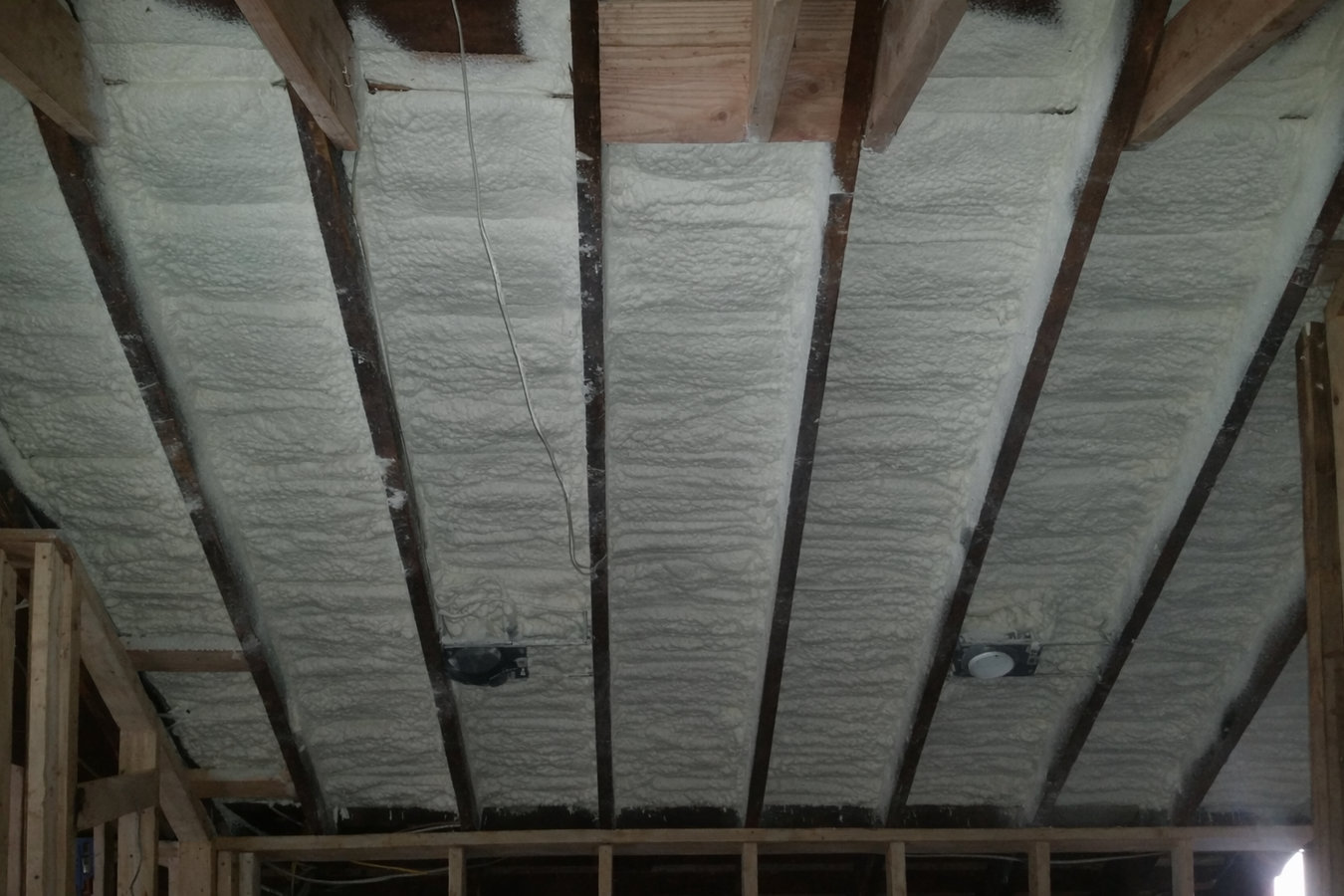
Standard insulation slows heat transfer. Closed-cell foam stops cold air at the source - sealing gaps, blocking moisture, and delivering the highest R-value per inch of any insulation available.
Closed-cell foam insulation in Rapid City is a two-part spray that expands, hardens, and bonds directly to your walls, floor framing, or crawl space surfaces - most residential jobs take one to two days and homeowners typically notice a difference within the first cold stretch of weather.
The difference between closed-cell foam and standard fiberglass or blown-in insulation comes down to one key fact: standard insulation slows heat transfer, but it does not stop air movement. If there are gaps around pipes, wires, framing joints, or your foundation edge, cold air finds those paths regardless of how much insulation you have. Closed-cell foam fills and physically seals those pathways. For a home in Rapid City - where Black Hills winds push cold air hard against your walls and temperatures can drop dramatically in a single day - that difference matters a great deal.
Closed-cell foam pairs naturally with a broader spray foam insulation approach across multiple areas of your home. If you are comparing material types, the comparison with open-cell foam insulation is worth understanding before you decide - the two products are suited to different applications.
Hold your hand near an electrical outlet on an exterior wall during a windy day. If you feel cold air, it is moving through gaps in your wall cavity. Rapid City's frequent high-wind events make this easy to test. Closed-cell foam is specifically designed to block this kind of infiltration where standard insulation cannot.
If a corner room or bedroom never quite reaches the temperature the rest of your home does, the problem is often in the wall or ceiling insulation - not your furnace. Uneven temperatures room to room are a reliable sign that some parts of your home's shell are losing heat faster than others. This is especially common in older Rapid City homes where insulation has settled.
If your gas or electric bills climb sharply from October through March without any change in your habits, your home is losing heat faster than your furnace can replace it. In Rapid City, where winter temperatures can stay below zero for days at a time, even a small gap in your insulation layer forces your heating system to work overtime.
If your home was built before the mid-1990s and has never had insulation work done, there is a good chance it was built to standards significantly lower than what is considered adequate today. The age of the home is a reliable signal - a quick assessment will tell you exactly where the gaps are and what it would take to bring your home up to a comfortable standard.
We apply closed-cell foam to the highest-impact areas in your home: rim joists, crawl space walls, attic decks, and exterior walls that face north or west - the directions from which Rapid City's coldest air typically arrives. Rim joist work is often the single highest-impact improvement a homeowner can make because that framing edge is where your floor meets the top of your foundation, and it is almost always full of air gaps in older homes. We pair rim joist sealing with a broader spray foam insulation approach wherever the assessment shows it will make a real difference.
We also apply closed-cell foam in crawl spaces where moisture control matters alongside thermal performance. For homes where budget requires prioritizing, we will walk your home and tell you where you get the most improvement per dollar. If you are still weighing insulation types, understanding open-cell foam insulation as an alternative is a reasonable part of that conversation - the two products are not interchangeable, and the right choice depends on where the material is going and what you need it to do.
Best for homes with drafty floors and high heat loss at the foundation edge - typically the highest-impact application for older Rapid City homes.
Best for homes with uninsulated crawl spaces where cold floors and moisture entry are the primary complaints.
Best for homes where the attic is used as conditioned space or where the roof deck needs both insulation and air sealing in a single step.
Best for older homes with walls that were never insulated or where existing insulation has degraded - applied through small bore holes without tearing out drywall.
Rapid City sits at the eastern edge of the Black Hills and experiences some of the most dramatic temperature swings in the country - a 50-degree change in a single day is not unusual, and winters regularly push well below zero. That kind of stress on a home's exterior shell means insulation that can flex and seal under pressure is more valuable here than in a milder climate. A significant portion of Rapid City's housing stock - including established neighborhoods like West Boulevard, Canyon Lake, and North Rapid - was built in the 1950s through 1980s, before modern energy codes required tight air sealing. For homeowners in these neighborhoods, closed-cell foam often does double duty: it replaces old insulation and seals decades of accumulated gaps at the same time.
Rapid City is also regularly exposed to strong winds off the Plains and down from the Black Hills. Wind-driven air infiltration - cold air forcing its way through tiny gaps in your home's shell - is one of the hardest comfort problems to solve with standard insulation alone. Because closed-cell foam bonds to surfaces and hardens, it physically blocks those pathways in a way that batts or blown-in material cannot. We serve homeowners throughout the region, including Gillette, WY and Belle Fourche, where similar wind patterns and older housing stock make closed-cell foam a strong fit. The Spray Polyurethane Foam Alliance provides installation standards and training resources that inform how we approach every project.
We will ask about your home's age, which areas you are concerned about, and any specific problems you have noticed - drafts, cold spots, high bills. You will hear back within one business day to set up a visit. The estimate is free and comes with no obligation.
We walk your attic, crawl space, basement, and any exterior walls you are concerned about. We check how much insulation is already there, where the air leaks are, and how accessible the areas are for spray equipment. This takes 30 to 60 minutes, and we explain everything we find.
You get a written estimate covering the areas to be treated, the foam thickness, and the total cost - with a clear explanation of why we are recommending what we are recommending. If a permit is required through Rapid City's Building Services office, we handle pulling it.
Plan to be out of your home for roughly 24 hours after installation while the foam cures and the space ventilates. Most residential jobs are done in a single day. We contact you when the work is complete and give you a clear all-clear time for re-entry, then walk through the finished work with you.
Free written estimate. No sales pitch. We walk your home and show you exactly what we would recommend before you decide anything.
(605) 646-9056Closed-cell foam is not the right answer for every application, and a contractor who recommends it everywhere is not giving you honest advice. We assess your home and tell you where the material will make a real difference versus where a less expensive option would perform just as well. That kind of straight conversation is how we earn return calls and referrals in Rapid City.
We have worked on homes throughout Rapid City - from older ranch-style homes near Canyon Lake and downtown to newer subdivisions on the north end - and we understand how Black Hills wind patterns interact with different construction styles and ages. That local experience shapes every recommendation we make about where foam will have the most impact.
Spray foam is a specialized skill. Applied incorrectly, it can cure unevenly, leave air gaps, or create ventilation problems. The Spray Polyurethane Foam Alliance publishes installation standards that define what correct application looks like - and we hold our work to those standards. We will walk you through the finished foam so you can see the coverage before we leave.
You get a written estimate before any work starts. The number covers everything - foam, labor, and any access or prep work. What you agree to upfront is what you pay at the end. A transparent written quote is one of the most important protections you have when hiring anyone for this work.
Choosing the right contractor for closed-cell foam matters more than it does for most insulation types, because the skill of the applicator directly affects the result. Our local track record across Rapid City neighborhoods is the clearest evidence we can offer.
A softer, lower-cost foam option suited for interior applications and areas where vapor control is less critical than thermal performance.
Learn moreThe broader spray foam category covering both closed and open-cell applications across attics, walls, crawl spaces, and commercial spaces.
Learn moreSchedule a free estimate now and have closed-cell foam in place before the next hard freeze rolls in off the Black Hills.