Loading...
Serving Rapid City, SD and surrounding areas. (605) 646-9056
The gaps above your ceiling are where most of your heating dollars escape in winter. Sealing them keeps heat where it belongs, lowers your monthly bills, and stops the ice dams that form along Rapid City rooflines every January.
Attic air sealing in Rapid City means finding every gap, crack, and opening where your living space connects to the attic - around light fixtures, plumbing pipes, wall tops, electrical penetrations, and the attic hatch - and closing them permanently - most jobs on a single-story home take one full day or less. Insulation slows heat transfer through solid material, but it cannot stop air from moving freely through gaps. Sealing the attic floor addresses the air movement directly, so the insulation above it can do its job without being bypassed.
Most Rapid City homeowners do not realize how much air is moving through their attic floor until they see the results of a blower door test - a device that measures home air leakage under controlled pressure. Homes built before modern energy codes were common here tend to be particularly leaky at the ceiling plane, because air sealing simply was not a standard construction practice. Attic air sealing is often paired with whole-home air sealing services when a homeowner wants to address the full building envelope rather than just the attic floor.
Warm air rises, which makes the attic the biggest single escape route for the heat you pay to create in winter. In summer, the reverse happens - hot attic air pushes down through those same gaps into your living space. Sealing them stops this exchange in both directions, making every other energy upgrade you have made work better.
If your home costs noticeably more to heat than similar-sized houses nearby, a leaky attic is one of the most common explanations. Rapid City winters are long and cold, and a home that cannot hold heat will run the furnace almost constantly. This is one of the clearest signals that air is escaping somewhere it should not be.
Ice dams - those thick ridges of ice that form at the edge of your roof - are a direct sign that warm air is escaping through your attic and heating the roof unevenly. In Rapid City, freeze-thaw cycles are common from November through March, and ice dams are a recurring problem for homes with poor attic air sealing. If you have seen them more than once, the attic is almost certainly part of the cause.
If the rooms directly below your attic are noticeably colder in winter or stuffier in summer than the rest of the house, air is likely moving between the attic and your living space. This is especially common in older Rapid City homes where the attic floor was never sealed during original construction.
Light fixtures, exhaust fans, and ceiling vents that connect to the attic can pull dusty or stale attic air directly into your rooms. If you notice a faint musty or dusty smell near ceiling fixtures - especially after the furnace kicks on - air is moving through gaps that should not be there.
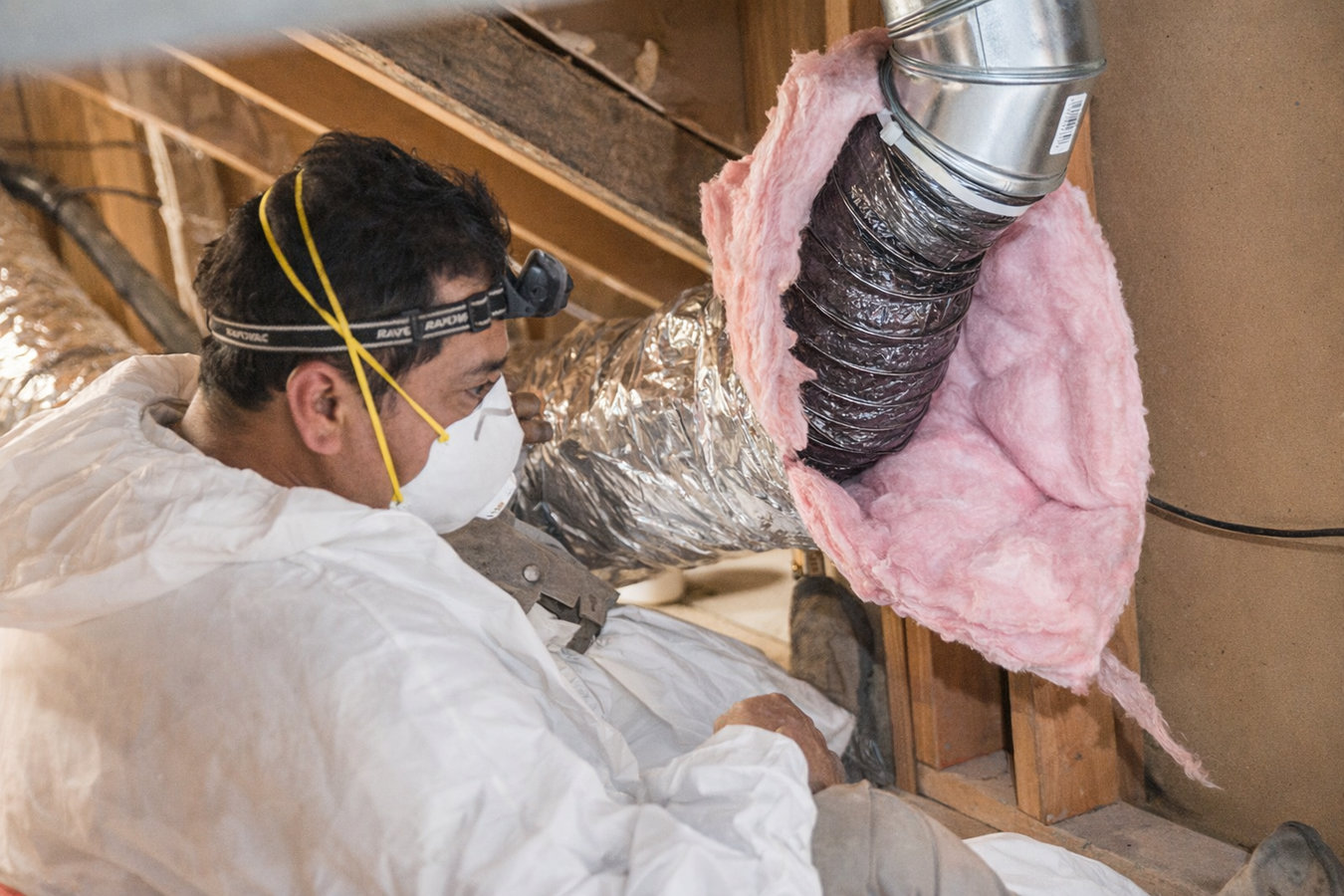
Rapid City Insulation Company performs attic air sealing as a standalone service or as part of a broader insulation upgrade. A technician moves or temporarily lifts existing insulation to reach the attic floor, then seals each gap using the right material for the opening - foam from a can for small penetrations, rigid foam board for larger gaps, and caulk for narrow cracks along framing. The work is methodical: every penetration in the attic floor gets addressed, not just the obvious ones. We also seal the attic hatch, which is one of the most commonly missed air leak sources in Rapid City homes.
For homeowners who want a full picture of their home's air leakage, we can pair attic sealing with a blower door test before and after the work - giving you a measurable before-and-after number, not just a promise that things are better. Attic air sealing pairs naturally with crawl space vapor barrier work when the goal is to address air and moisture from both the top and bottom of the home at the same time. It also fits neatly into a broader air sealing services project that covers the whole building envelope.
Closing every penetration in the ceiling plane - pipes, wires, light fixtures, wall tops - so warm air cannot escape into the unconditioned attic.
One of the most overlooked air leaks in a home - a properly sealed and weatherstripped hatch makes a real difference in homes where the hatch opens directly into the living space.
For homeowners who want measured proof - before and after testing shows the actual reduction in air leakage achieved by the sealing work.
Sealing first, then insulating on top - the correct sequence for homes where both gaps and thin insulation need to be addressed together.
Rapid City sits in DOE Climate Zone 6 with winter temperatures that regularly drop below zero and a heating season that runs from October through April. That is a long time for your furnace to fight against a leaky attic ceiling. The city is also positioned at the eastern edge of the Black Hills, where strong and sustained winds - especially in winter and spring - force cold outside air through gaps that might otherwise be minor. Homeowners here often notice drafts and cold spots that feel out of proportion to the outdoor temperature, and attic air leakage is frequently the cause. The ENERGY STAR Seal and Insulate campaign consistently identifies the attic as the single highest-priority location for air sealing in cold-climate homes.
Many homes in Rapid City's established central and west-side neighborhoods were built between the 1950s and 1980s, a period when air sealing was not a standard construction practice. If your home is in that age range and has never had an energy improvement, the attic gaps are likely significant - and Black Hills Energy offers rebates for qualifying air sealing work that can offset a portion of the project cost. We serve homeowners throughout the region, including those in Spearfish and Deadwood, where older housing stock and Black Hills wind exposure create the same conditions.
You reach out by phone or through the contact form. We ask a few questions about your home's age and the symptoms you have noticed - high bills, ice dams, cold rooms - and schedule a visit. We reply within one business day.
A technician goes into your attic to see how much existing insulation is there, where the gaps and penetrations are, and how accessible the attic floor is. Some contractors also run a blower door test at this stage. You receive a written estimate before any work starts.
You do not need to leave your home during the work. Clear a path to the attic hatch and move stored items directly below it. Let the contractor know about any known issues - a leaky roof, previous water damage - so nothing unexpected slows the job.
The crew works in the attic, moving insulation to reach the floor and sealing each gap with the right material. A thorough job on an average Rapid City home takes most of one workday. Before leaving, the crew puts insulation back, cleans up, and walks you through what was found and sealed.
Free estimate, no obligation. We walk your attic, show you what we find, and give you a written quote before any work begins - you stay home the whole time.
(605) 646-9056A thorough attic air sealing job covers every gap in the ceiling plane - pipes, wires, light fixtures, top plates of interior walls, and the attic hatch itself. We work systematically through the attic floor so nothing is skipped. The gaps you cannot see are often larger contributors to heat loss than the ones you can.
We work in the established neighborhoods where Rapid City's pre-1980 housing stock is concentrated - areas where the gaps are significant and the insulation has had decades to settle. That familiarity with local construction means we know where to look first and what materials work best in each situation.
Black Hills Energy serves most of Rapid City and has offered rebates for qualifying air sealing and insulation improvements. We provide the documentation the rebate application requires - a written summary of what was sealed and any test results. Federal tax credits for energy improvements may also apply. Current rebate details are available at the Black Hills Energy website.
After the work is done, you get a written summary of what was found and sealed. If a blower door test was part of the project, you get the before-and-after numbers. That documentation is what you need for rebate applications, tax credits, and your own peace of mind that the work was actually done right.
Every attic air sealing project we complete in Rapid City comes with documentation of what was found and sealed, so you know exactly what you paid for. The Building Performance Institute sets the professional standards for home energy work - including attic air sealing - and their guidelines shape how we approach every job, from the initial assessment through the final walkthrough.
Addresses moisture and air movement at the base of your home - pairs with attic air sealing when you want to tighten both the top and bottom of your building envelope.
Learn moreWhole-home air leakage assessment and sealing across all areas of the building envelope, not just the attic floor.
Learn moreFall scheduling fills fast - locking in your appointment now means you head into winter with a tighter home and lower heating bills from the first cold night.